Opens in a new tab

Rob Hopkins: How to fall in Love with the Future

08. Jul 2025

All Articles

Disclaimer

The views expressed here represent the personal perspectives of their authors and do not necessarily reflect the official positions of Youth4Planet.

Note: this article was written by Jacqueline Zweers

Who is Rob Hopkins and what is he famous for?

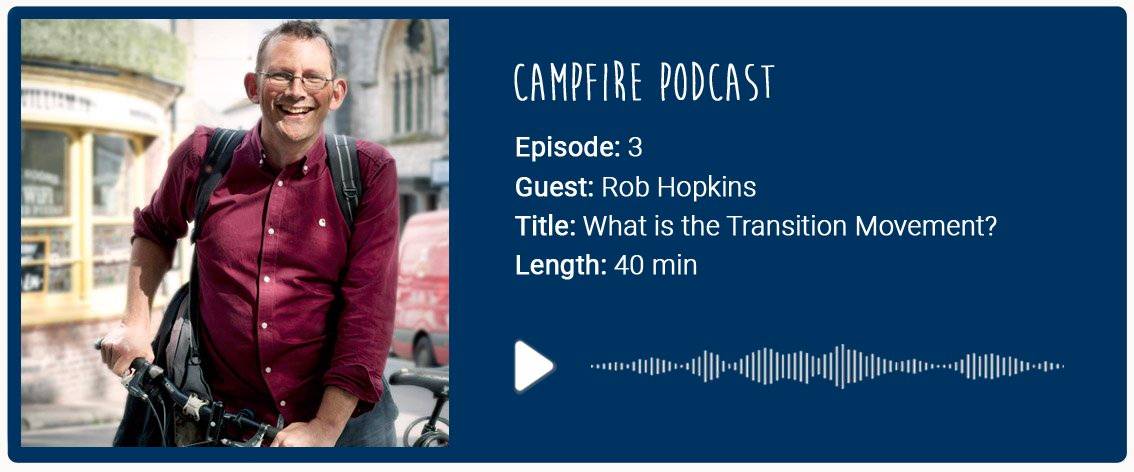
Rob Hopkins is a renowned English environmental activist, writer, educator and founder of the global Transition movement, founded in 2005.

The Transition movement is a grassroots initiative that empowers communities around the world to become more resilient and sustainable in response to climate change, fossil fueled business-as-usual, and economic uncertainties.

Rather than waiting for top-down solutions, Transition initiatives encourage local action . . . including growing food, producing renewable energy, and building strong local economies in order to reduce dependence on fossil fuels AND create a better, more connected future. Today there are over 1,400 Transition initiatives across 50+ countries.
What are Rob’s publications & media?

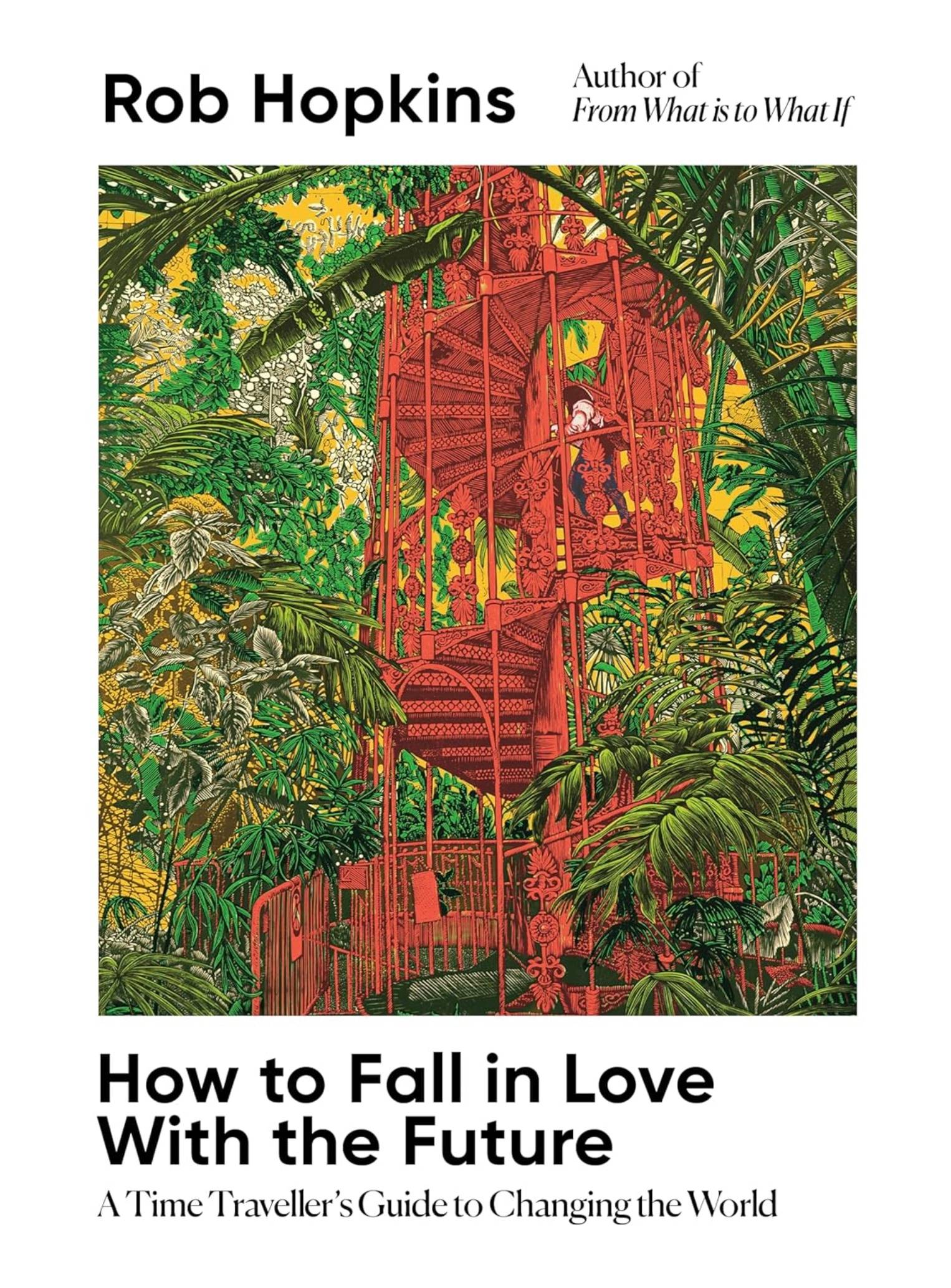
He is the author of influential books including The Transition Handbook (2008), The Transition Companion (2011), The Power of Just Doing Stuff (2013), 21 Stories of Transition (2015), and From What Is to What If (2019. And latest author of How to fall in Love with the Future (2025). He also hosts the podcast From What If to What Next and has spoken at TEDGlobal/TEDx, BBC, and featured in the French documentary Demain.
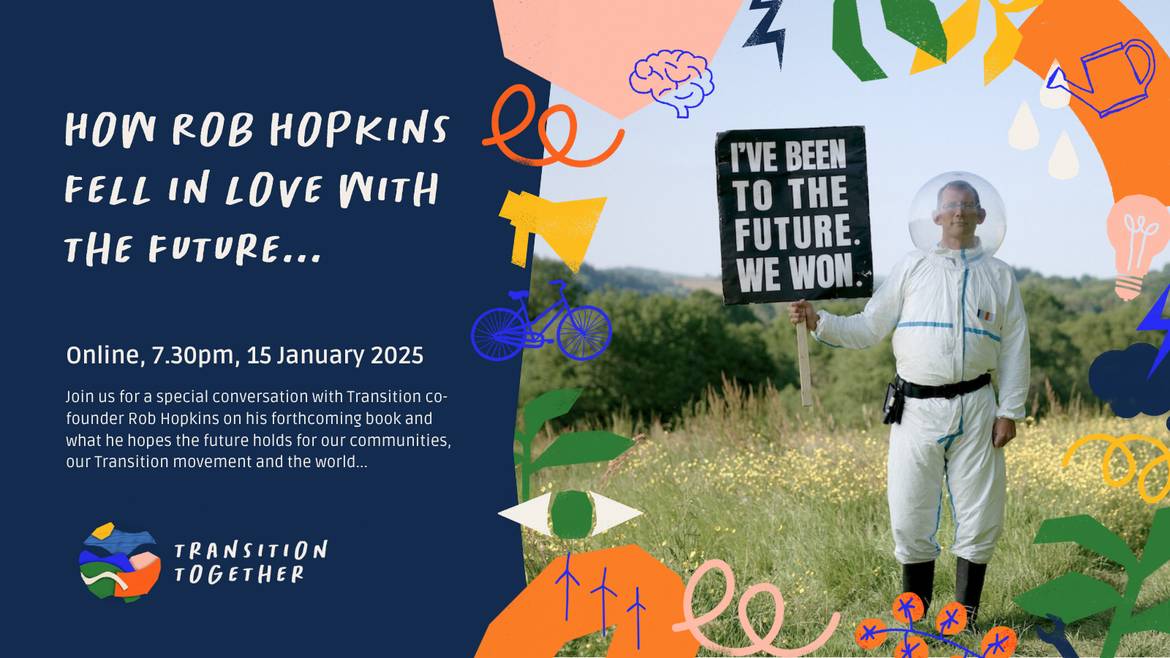
Hopkins’s special visit on the 10th June 2025 in the Natural History Museum in Luxembourg . . . my experience:

I was fascinated!! Before the 10th June event, I had never heard of him. The first moments during his presentation, Rob directly inspired me to act in even more inspired ways. I loved watching his ambition and passion to make morally courageous changes. His positive point of view about the future was contagious.

Now, for a minute before reading more, close your eyes and ask yourself these questions:

  • If you think about the future . . . do you feel hopeful or anxious?
  • Why do you feel those ways?
  • Yes or No: Could your feelings be shaped . . . consciously or unconsciously . . . by news, social media, societal pressures and/or the voices of others?
  • What images . . . what scenarios . . . come into your mind when you imagine “the future”?

           ……. Take your time . . . Think about it……………

The answer is that most people . . . when they think about the future:

  • They immediately think negative thoughts.
  • Why?
  • Often because news on television, radio and other types of media fill us with dread.

That’s exactly the reality today Mr. Rob Hopkins wants to change.

His method? Reclaiming the imagination. He invites us to picture a future that is joyful, inclusive and sustainable . . . a ridiculously different from what we are told is “realistic”. Rob opens his talk by saying: “I have just come back from 2030 in a Time-Machine . . . ” , and from there he paints a vision so compelling, it feels possible. One of Rob’s key beliefs: “any useful statement about the future should…at first…seem ridiculous.”

The statement “Any useful statement about the future should at first seem ridiculous” aligns with the title of his newest book: “How to Fall in Love with the Future”. Our approach must dare to think, belief and mostly act in the most positive . . . most ridiculous way. We must visualize beliefs for the world to be as we wish the world to be. For example: No cars and no planes, and instead? Everyone mostly bikes and takes long walks to get to work, school, events, free time activities, meet friends, go to restaurants, and everything in between. A world that feels alive, where local economies thrive and people feel deeply connected to nature and to each other.
This doesn’t have to be a utopian fantasy. And it certainly doesn’t have to be a future dominated by AI, job loss, and self-driving cars . . . although that’s the future we’re often being sold. These narratives are not destiny. They’re just one version of the future, shaped by new technologies like ChatGPT or automated systems. As Rob reminds us: “We don’t need new inventions—we already have everything we need.”

The Bigger Picture: Climate, Imagination, and Action: on international level, the Paris Agreement . . . signed by nearly all countries in 2015 . . . anchors our shared planetary commitment to fight climate chaos. According to the United Nations’ Intergovernmental Panel on Climate Change, we must stay under 1.5°Celsius of warming threshold. To achieve that, global emissions must be cut by around 45% by 2030, compared to 2010 levels. Rob Hopkins says we are definitely nearby and we have to find different approaches to reach that goal. Rob Hopkins believes we’re still close enough to make that happen. But to do so, we need radically different approaches . . . rooted in creativity, community, and courage.

Final Thought:
The future isn’t written yet. We can choose to fear the future, or we can choose to fall in love with it.

Leave the first comment

Read on

Subscribe to our Newsletter

Newsletter
Back to Field Notes
  • What are we in Luxembourg actually Regenerating? Reading the FT Climate Dashboard thru Tenzin Seldon’s GDR Lens

    As Financial Times Journalists Dan Clark, Steven Bernard, Sam Joiner and Justine Williams write yesterday: “The Financial Times has created a searchable dashboard of 197 countries’ historical emissions and future climate targets, providing information on the energy mix that indicates their progress on renewable energy. The database is in its sixth iteration, after being first…

    Find out more
  • Dear Ambassador Audrey Tang, What does “ownership” of 3 Degrees Celsius of Global Warming mean for Luxembourg?

    Take a few minutes to read Financial Times’ Journalist Ian Johnston’s article (#GiftLink https://giftarticle.ft.com/giftarticle/actions/redeem/44808d1c-c2fc-4513-bd74-02206d6d1343) and reflect: what does “ownership” of 3°Celsius of Global Warming mean for Luxembourg? . . . especially through the lens of Plurality-author by the renowned scholar and Taiwan Ambassador Audrey Tang. Question: How are we pro-actively preparing . . . with…

    Find out more
  • Reimagine Howald

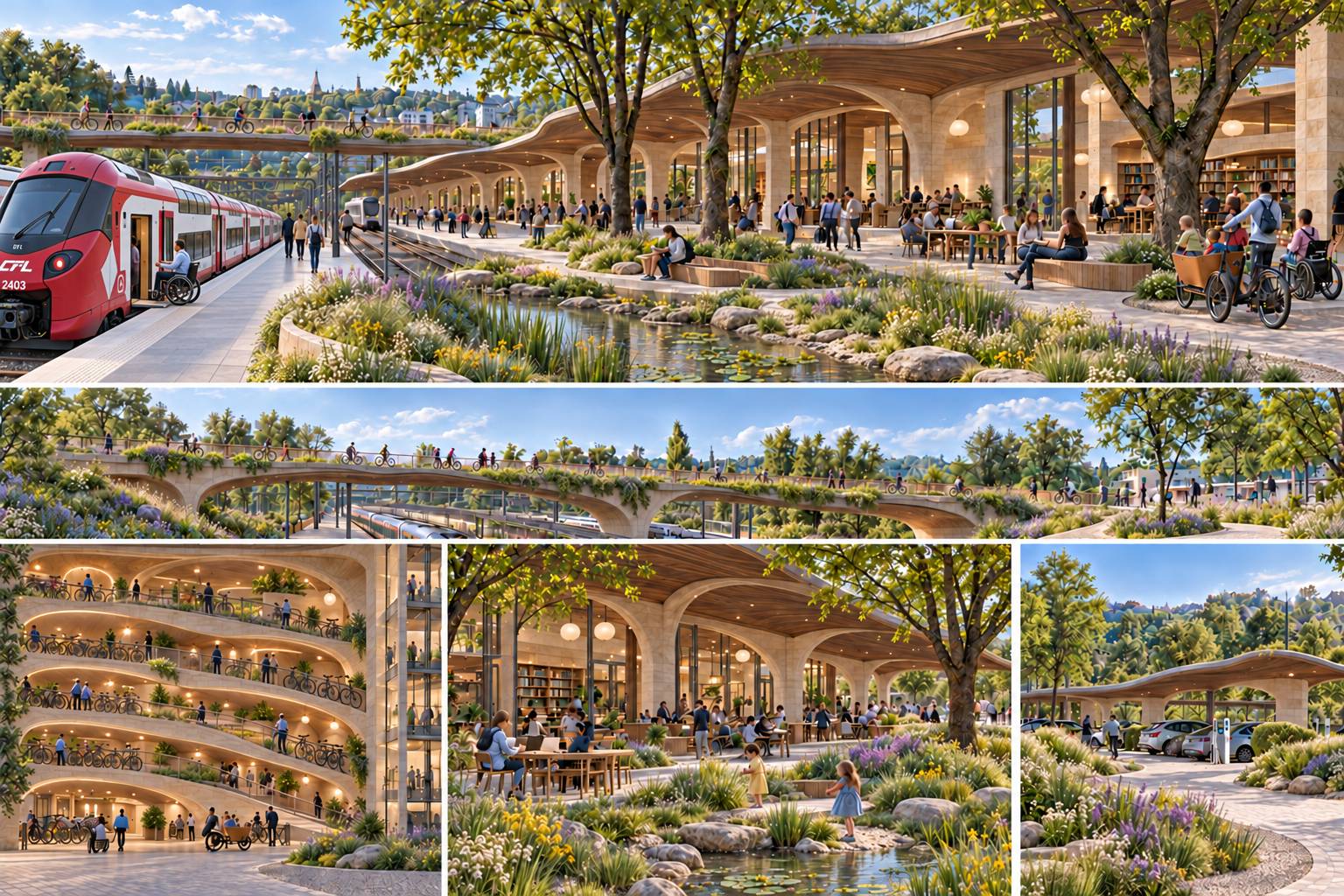
    #ReimagineHowald Nine years of railway-transformation have brought Howald a major mobility hub. The Big Question: what kind of everyday place will this hub will pollinate? CFL – Société Nationale des Chemins de Fer Luxembourgeois’ Howald Railway-station now connects trains + trams + buses + people who park cars + people who pedal bicycles + people…

    Find out more
  • A small “Pay it forward” MERCI Villmols to Differdange

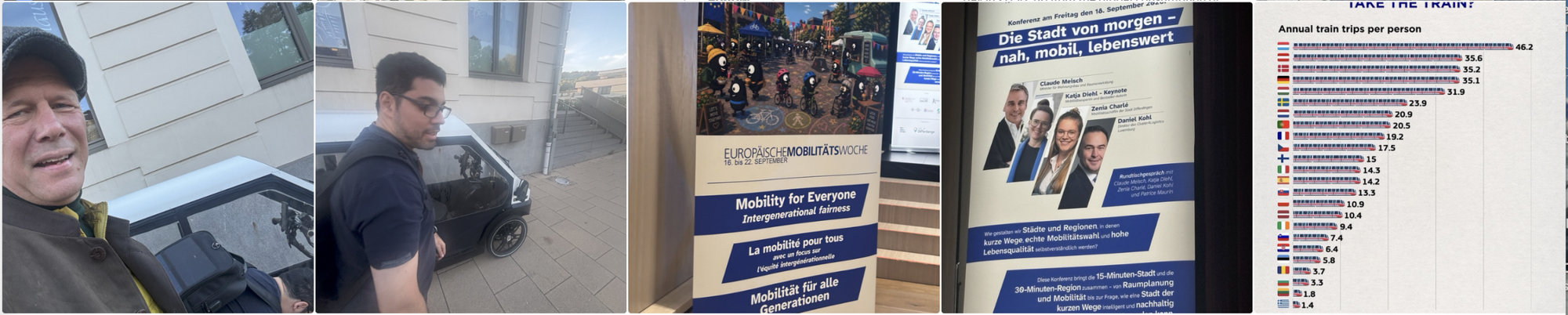
    Last week’s EU Mobility Week gathering in Differdange gave us something valuable: an inspiring round-table discussion by Housing Minister Claude Meisch + Expert Katja Diehl + Mobility Manager for the City of Differdange Zenia Charlé + Director of Cluster4Logistics Luxembourg Daniel Kohl + LuxMobility Managing Director Patrick van Egmond = people who care deeply about…

    Find out more
  • We do not lack courage, intelligence or capital

    We do not lack courage, intelligence or capital. We lack more useful mountains to climb. When I was much, much younger . . . I looked forward to Jeremy Clarkson’s columns in The Sunday Times. Jeremy then and now writes with panache, taking an engineering problem, a political absurdity or an ill-advised adventure and making…

    Find out more
  • #GoGoVelo Day 4: what no KPI can measure

    Day 4 began at 6:29 this morning as I pedaled down Ville de Luxembourg’s avenue Franklin D. Roosevelt . . . followed rue Ulric into the Grund and climbed the cobblestones of the Montée du Grund towards the Ville Haute. I passed the Lëtzebuerg City Museum and the very old Église Saint-Michel before turning towards…

    Find out more
  • Today is Day 2 of Provelo.lu + Klima-Bündnis + 🇱🇺Ministry of Mobility & Public Works’ Autumn 2026 GoGoVelo autumn campaign

    Yesterday, I participated in the GoGoVelo campaign while pedaling a bicycle in London. London keeps showing what happens when #ActiveMobility moves from niche to normal. Rental e-bikes seem to outnumber cars . . . and are everywhere. Cargo bikes, foldable Brompton Bicycles, commuters + visitors mix into everyday streets. Isaac Newton’s legacy shares space with…

    Find out more
  • 28.08-20.09, Mosel & Saar: CreatiVelo Earthbeat Tour

    Pressemitteilung Vom 28. August bis 20. September 2026 bringt die „CreatiVelo Earthbeat Tour“ Jugendliche aus Luxemburg, Rheinland-Pfalz und dem Saarland zusammen und gibt ihren Ideen und Zukunftsvisionen eine Stimme. Möglich wird die Tour durch das grenzüberschreitende LEADER-Projekt „Austausch über Grenzen“. Die drei LEADER-Regionen Miselerland, Moselfranken und Merzig-Wadern arbeiten darin gemeinsam daran, die deutsch-luxemburgische Nachbarschaftsregion als…

    Find out more
  • BNE 2026, ChangeNOW and Climate Action Tiger’s Take-aways for the period 16th April 2026 – 24th March 2026

    What becomes visible this spring, as one looks carefully enough, is not merely a sequence of events . . . but a sequence of scales: at the BNE Days 2026 in Luxembourg, the scale was national, pedagogical, almost deceptively modest. Yet the architecture was unusually ambitious. Three pillars . . . networking, training, youth. A…

    Find out more
  • Yes or No question: Safety is something that must be argued for?

    Should “safety” be something that must be argued for . . . or should “safety” be simply there? There are moments when a country is asked a difficult question . . . and this time, the question has been formalized. Public Petition n°3984 https://www.petitiounen.lu/fr/petition/3984 is collecting signatures on the Chamber of Deputies Luxembourg website. Public…

    Find out more