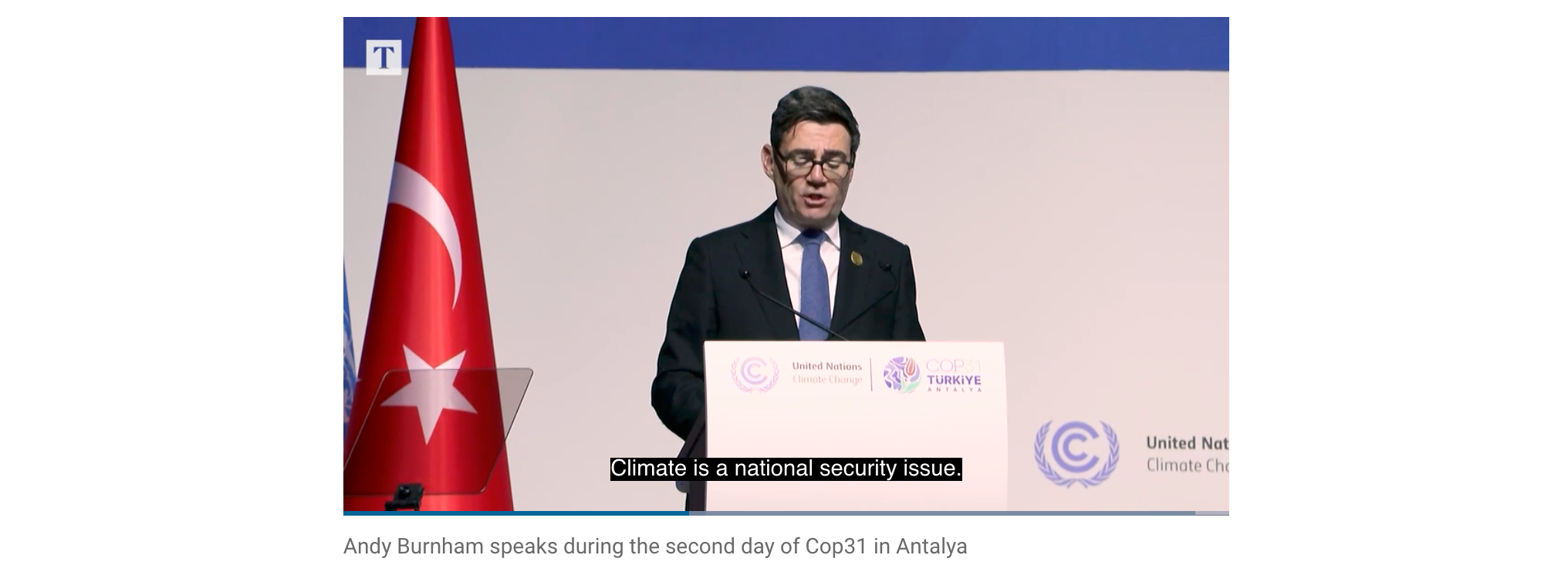

A few reflections as today . . . Great Britain’s Prime Minister Andy Burnham framed Climate Change through the correct Churchillian lens: National Security. Burnham’s statement makes more public the suppressed and partially released joint national security assessment Global Biodiversity Loss, Ecosystem Collapse and National Security . . . compiled with input from the UK’s Joint Intelligence Committee overseeing MI5, MI6, and GCHQ . . . and published through GOV.UK Here are Burnham’s key points as reported in The Times by Environmental Editor Adam Vaughan (https://www.thetimes.com/uk/environment/article/andy-burnham-cop31-britain-net-zero-strategy-lzs5tr0ds) and Bloomberg by Journalist John Ainger (https://www.bloomberg.com/news/articles/2026-11-12/uk-promises-climate-leadership-in-backing-electrification-at-cop?srnd=homepage-europe) and the Financial Times by Journalists Attract Mooney & Ian Johnston (https://giftarticle.ft.com/giftarticle/actions/redeem/f54325ce-9964-4894-9e94-af781254382c):
- The Reality of 1.5°C: Burnham acknowledged a stark reality that the world will likely breach the 1.5°C warming limit. Instead of surrender, he argued this makes “climate leadership and action more urgent.”
- From the Environment to Security: He explicitly stated that “Climate is a national security issue.” To back this up, he appointed Dame Madeleine Alessandri (chair of the joint intelligence committee) as a special representative for climate security. This means Climate Change is now being treated with the same seriousness as Military Threats and Espionage.
- Domestic Impact: He cited the recent UK summer . . . the hottest on record that featured five heatwaves and unprecedented wildfires. He connected Climate Change directly to the cost of living, correctly blaming an overreliance on fossil fuels for sending gas bills “soaring.”
- The “Electric Century”: Burnham championed electrification (transport, heat, industry) not just for the climate, but for energy security and job creation (offshore wind, electric arc furnaces). He highlighted that driving an EV in the UK is now cheaper than a petrol car.
- Political Isolation: Notably, the article mentions that several European leaders (like France’s Macron) stayed away from COP31. Burnham used this to stand out, reaffirming the UK’s 2050 net-zero target despite domestic political fractures (with the Conservatives and Reform UK pledging to scrap it).
Reflections & Key Takeaways for Youth4Planet? What can you take away from this?
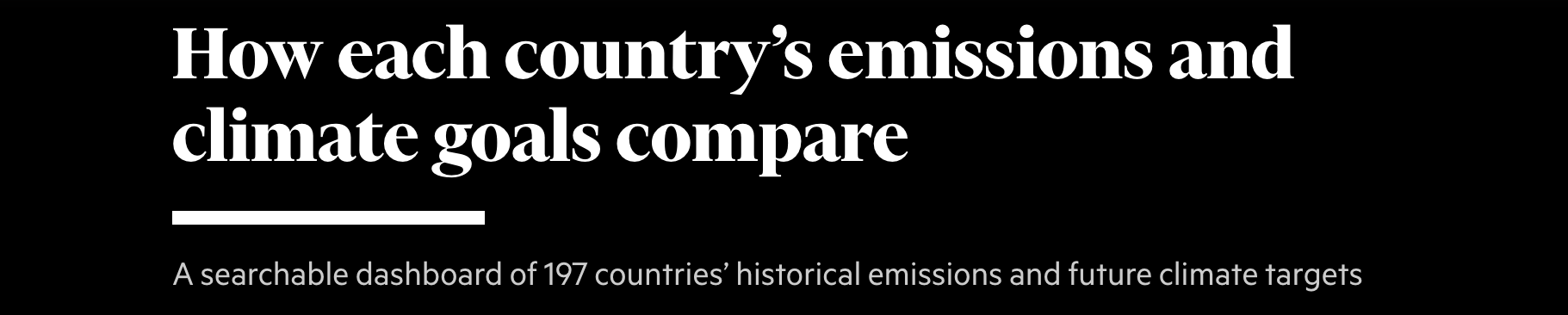
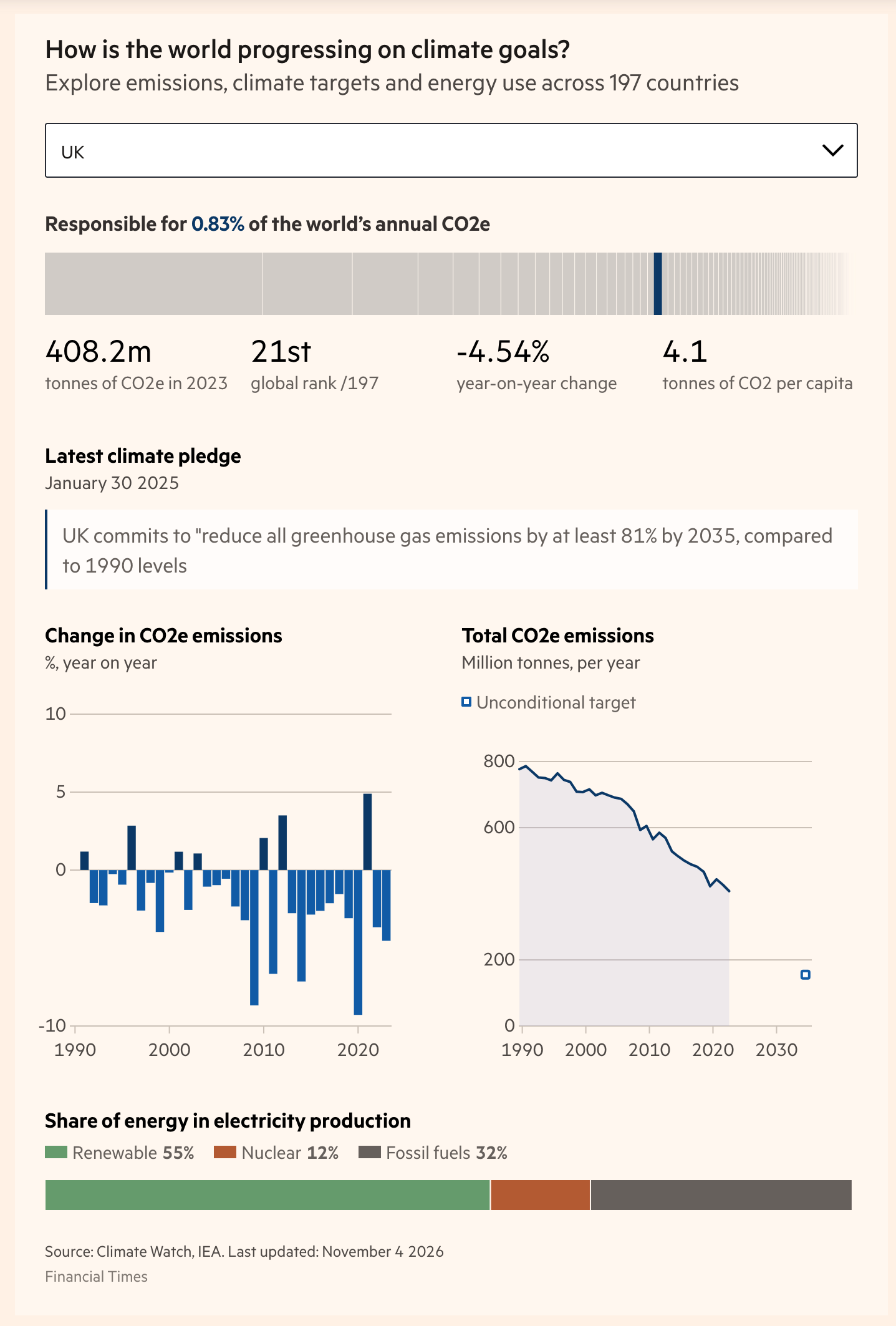
- Data vs. Rhetoric: The Financial Times’ Climate Progress dashboard (No Subscription required https://www.ft.com/content/9dfb0201-ef77-4c05-93cd-1e277c7017cf?syn-25a6b1a6=1) shows the UK is making progress (55% renewables), but the Prime Minister’s speech highlights that the pace is still too slow. How would you use dashboards like this in your own discussions? Are the targets matched by the annual trends?
- Reframing the Narrative: The shift to calling climate change a “national security issue” is a correct label and powerful communication tool. When you are discussing with policymakers . . . how would you successfully frame Climate Action as ensuring Energy Independence + Lowering Household Bills + Preventing Wildfires in Europe?
- The Importance of Political Will: The article notes that some European leaders skipped COP31, and domestic UK politics are fracturing over net-zero. This shows that climate progress is fragile. Using the solidarity and plurality tools championed by Taiwan’s Cyber-Ambassador Audrey Tang, how would you use your crucially needed voices to maintain the “political consensus” that Burnham mentioned?
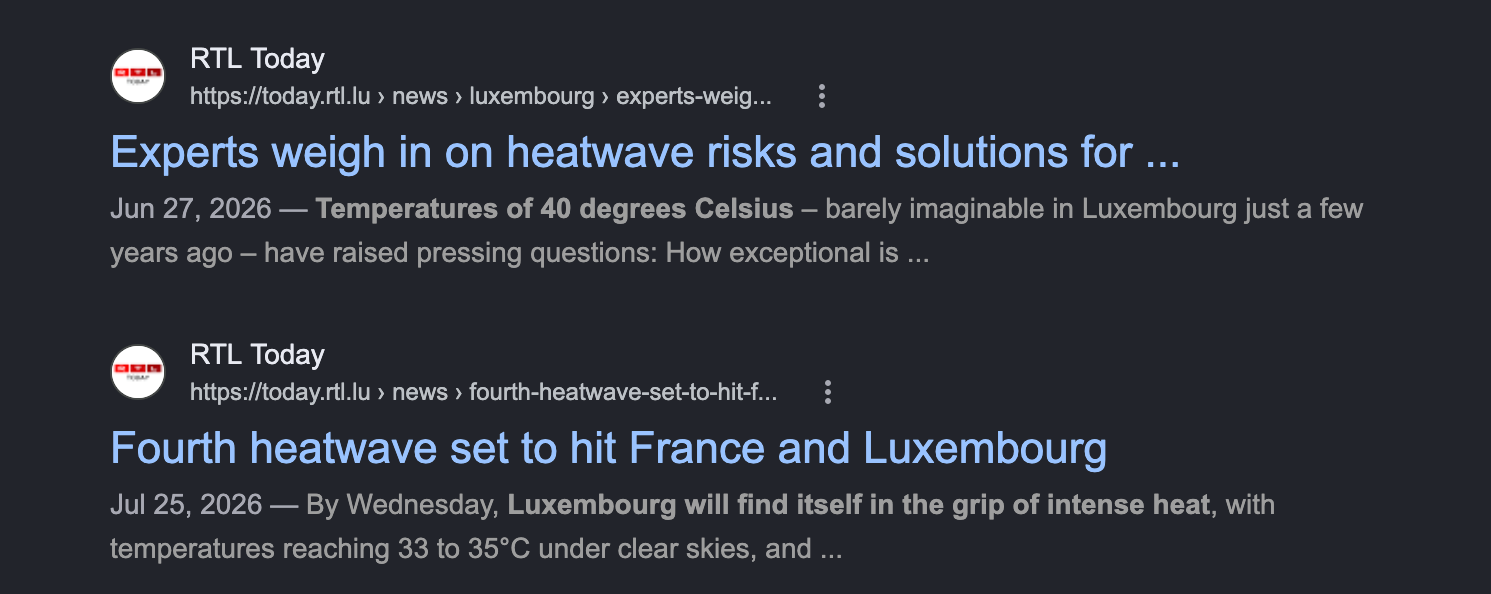
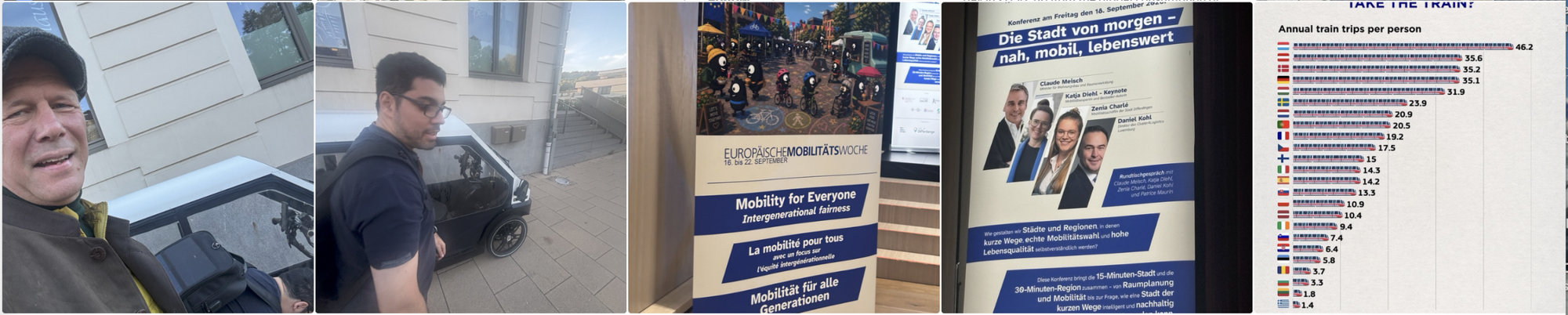
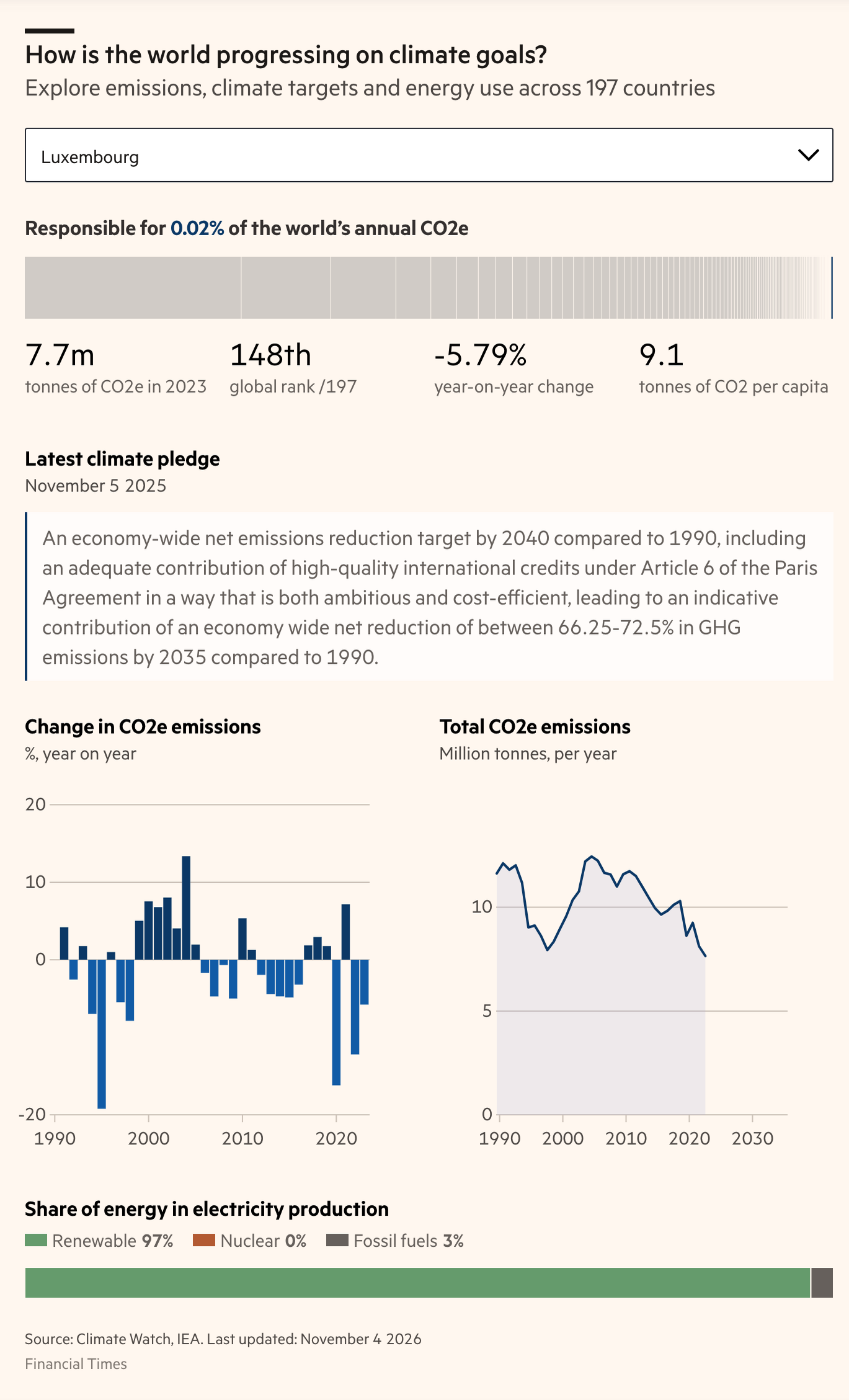
- Luxembourg’s Context: Compare the UK data to Luxembourg . . . How does Luxembourg’s per capita emissions and renewable energy share compare to the UK’s 55%? (Hint: Luxembourg has a very high per capita carbon footprint due to fuel sales and a smaller renewable grid). Use the FT dashboard to compare your home country to others and discuss what Luxembourg can learn from the UK’s energy transition:
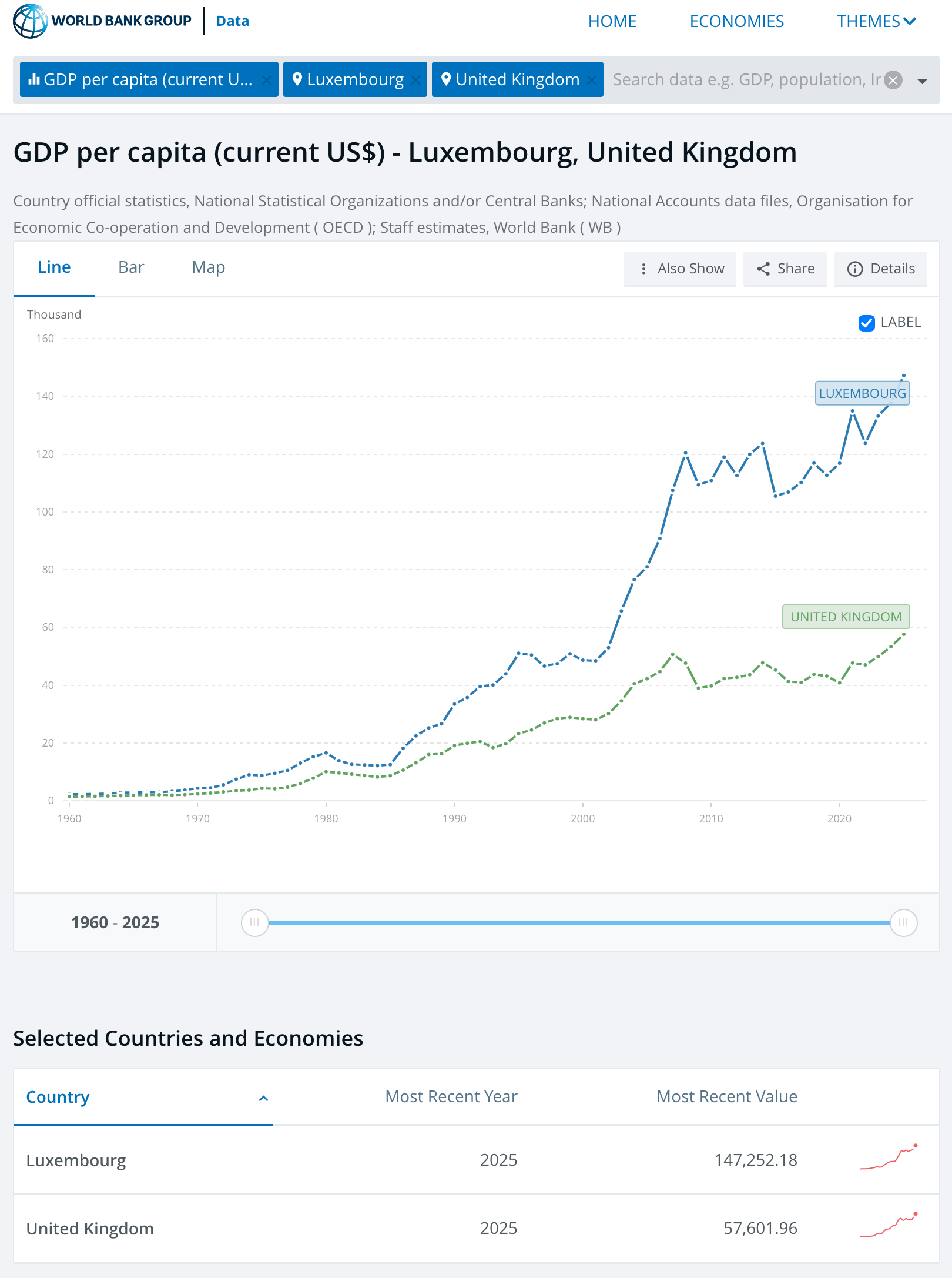
How will economic wealth and geopolitics shape the Electric Century in the UK and Luxembourg?
- The World Bank data is striking. In 2025, Luxembourg’s GDP per capita is $147,252, while the UK’s is $57,602. The UK (with 0.83% of global emissions) is making massive strides in decarbonizing its grid (55% renewables) compared to Luxembourg, which has a much smaller landmass, grid, and industrial base, but historically a high per capita carbon footprint: https://data.worldbank.org/indicator/NY.GDP.PCAP.CD?end=2025&locations=LU-GB&start=1960&view=chart
- The “Small but Mighty” Responsibility: Luxembourg has immense financial and political capital. With such high GDP per capita, Luxembourg has the resources to incarnate next-level Marshall Plans for Renewable Energy x Battery Storage x Green Finance.
- Question for students: Luxembourg is wealthy. We have a moral obligation to fast-track Climate Decency across national & regional grids + finance sectors. We must use our financial power to accelerate Europe’s green transition . . . and planetary biocapacity.
- How can our generation ensure that the “Electric Century” is a just transition for all, regardless of GDP?