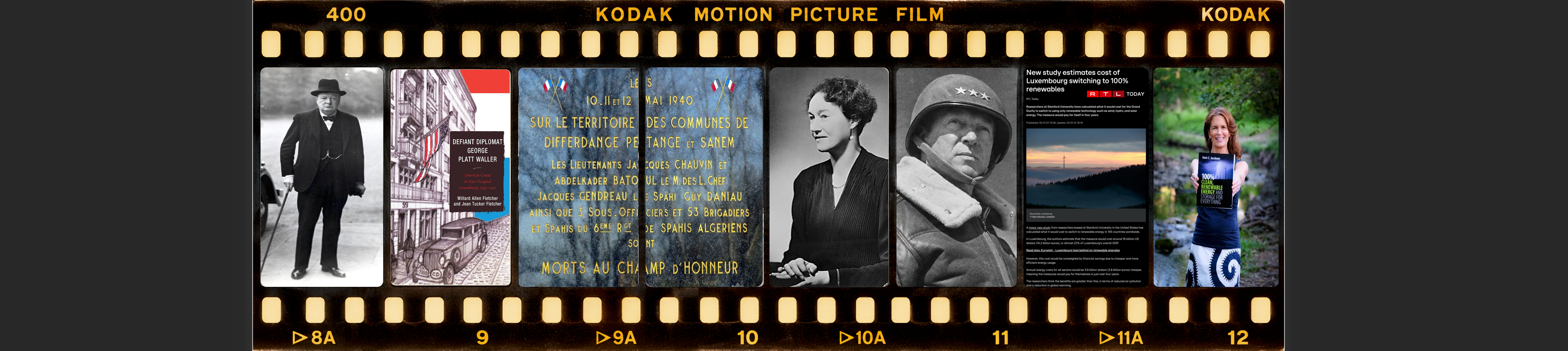

Yesterday was my birthday, and I received a copy of Second World War-era diplomat George Platt Waller’s journal-turned-biography. Context: on the 10th May 1940, Nazi Germany invaded Luxembourg. That morning, an American diplomat named George Platt Waller, who lived a few hundred meters from my grandparents’ home in Ville de Luxembourg . . . knocked on the door of Guillaume and Marie Heldenstein-Walich. George asked permission to observe the unfolding invasion from their grand balcony . . . and take notes from their home. I live in that same house today. It is the house where, at ten months old, I took my first steps. It is also a house that witnessed what happens when Tyrants’ shameless ambitions collide with the sovereignty of a neighboring nation . . . and when ordinary people find themselves on the frontlines of history. During this History-Hinge-Moment . . . we need extra-ordinary neighbors like George Platt Waller. As America’s senior diplomatic representative in Luxembourg, he remained after Son Altesse Royale la Grande-Duchesse Charlotte and government fled to Portugal and then the United States.
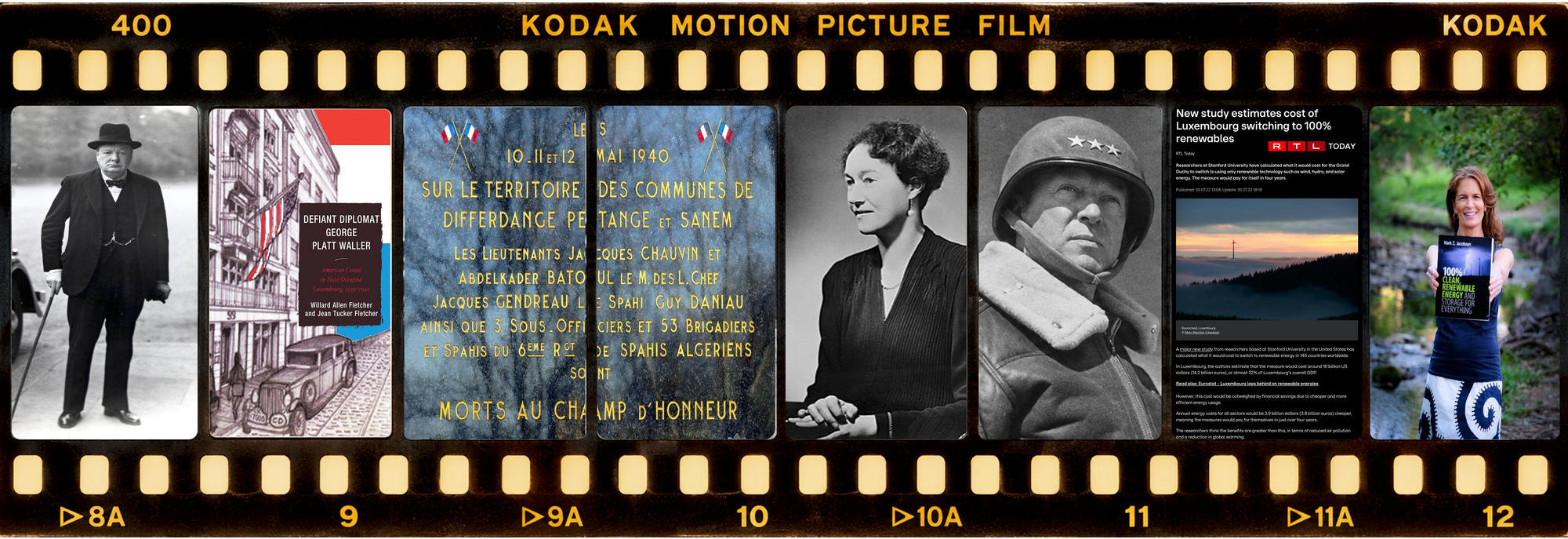
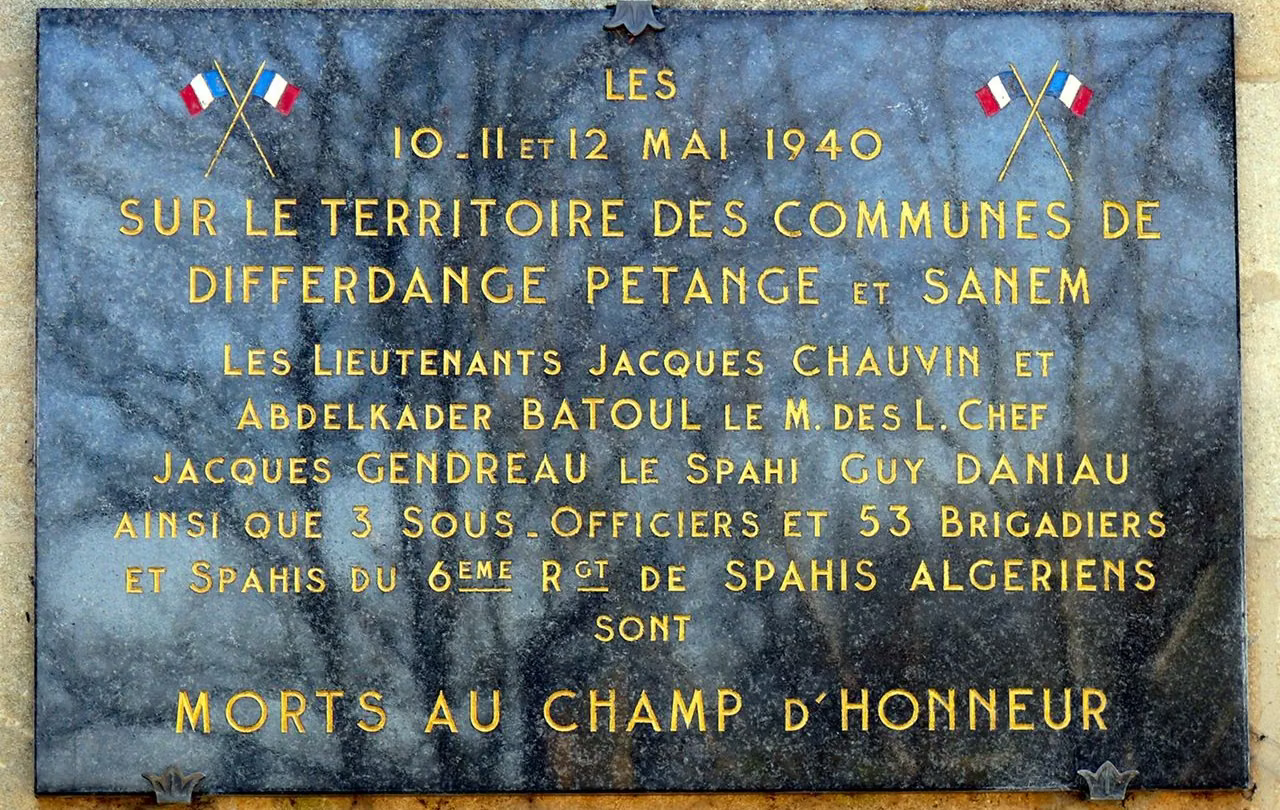
We need extra-ordinary neighbors . . . like the soldiers who gave their lives protecting Luxembourg’s fleeing government: 59 soldiers from North Africa’s 6th Algerian Spahis (en français: 6e Régiment de Spahis Algériens) + the 1st Spahi Brigade (1re Brigade de Spahis) were killed in the fighting around Pétange, Differdange, Lasauvage, and Sanem. George Platt Waller documented the Nazi occupation, helped refugees and refused to turn his back on The Grand Duchy of Luxembourg . . . a country that had become his home. His extraordinary testimony survives. That same day . . . the 10th May 1940, Winston Churchill . . . Neville Chamberlain government’s First Lord of the Admiralty + foolishly Gandhi-hating + Member of Parliament representing Epping in the House of Commons . . . thankfully full-throated Nazi-berating Seer . . . became Britain’s war-time Prime Minister. Royal Air Force (RAF) crews operating from forward bases in France attacked Nazi German military columns advancing through Luxembourg. Of the first 32 Fairey Battle bombers committed, 13 were lost, according to the RAF’s official campaign history. Those young airmen went into battle against overwhelming odds, and some never came home. Four years later, American soldiers liberated Luxembourg City on the 10th September 1944. When Hitler launched his last great offensive through the Ardennes that December, General George S. Patton’s Third Army helped drive the Nazis back, relieving Bastogne and liberating Luxembourg’s northern towns through the bitter winter of 1944–45.
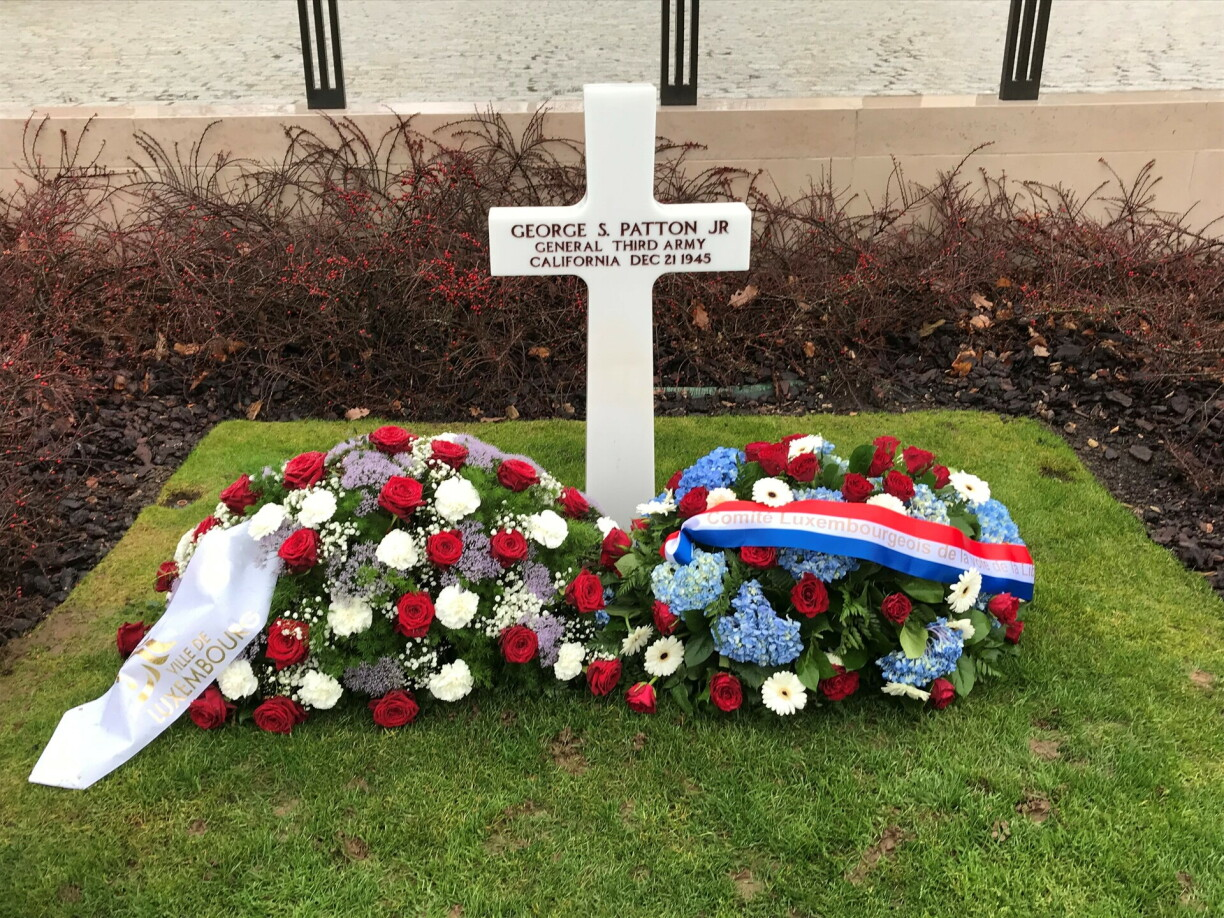
Luxembourg remembers our Liberators: General Patton rests with Full Honors in the American Military Cemetery at Hamm . . . among the thousands of men who paid for Europe’s freedom with their lives. Their legacy is not an invitation to romanticize war. They are reminders that Freedom + Sovereignty & Decency survive another day . . . because people have the courage to defend them. I cannot help wondering what those Liberators would make of Europe’s political leadership in November 2026.
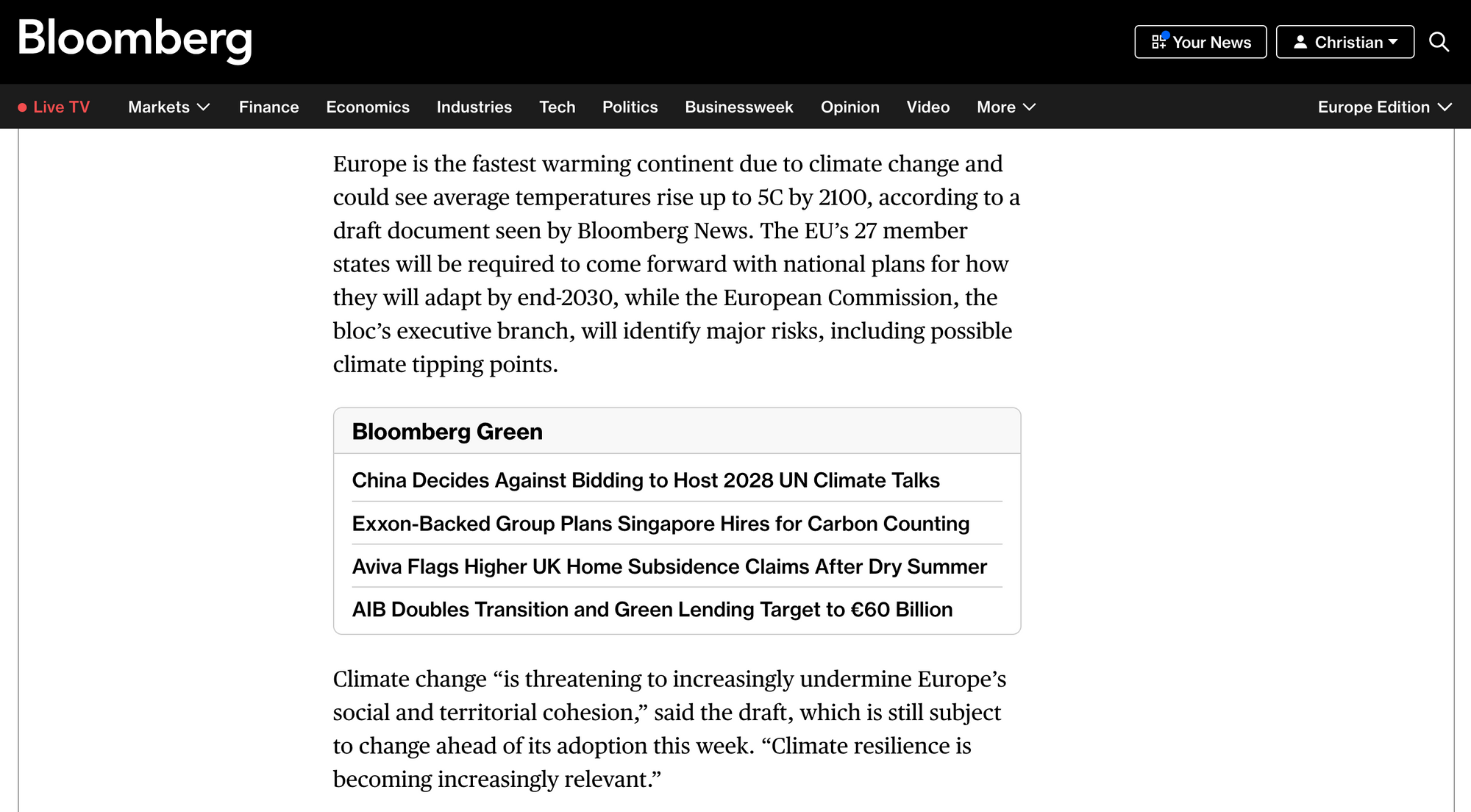
In December 2019, Bloomberg reported that the World Meteorological Organization was warning of a possible 3°C to 5°C rise in global temperatures by 2100. Seven years later, Bloomberg reports that Europe, already warming roughly 2X as fast as the global average, is preparing for the possibility of 5°C of continental warming by the end of this century. Different projections, different geographies, but one unmistakable warning about the consequences of continuing to burn our way through the foundations of civilization.
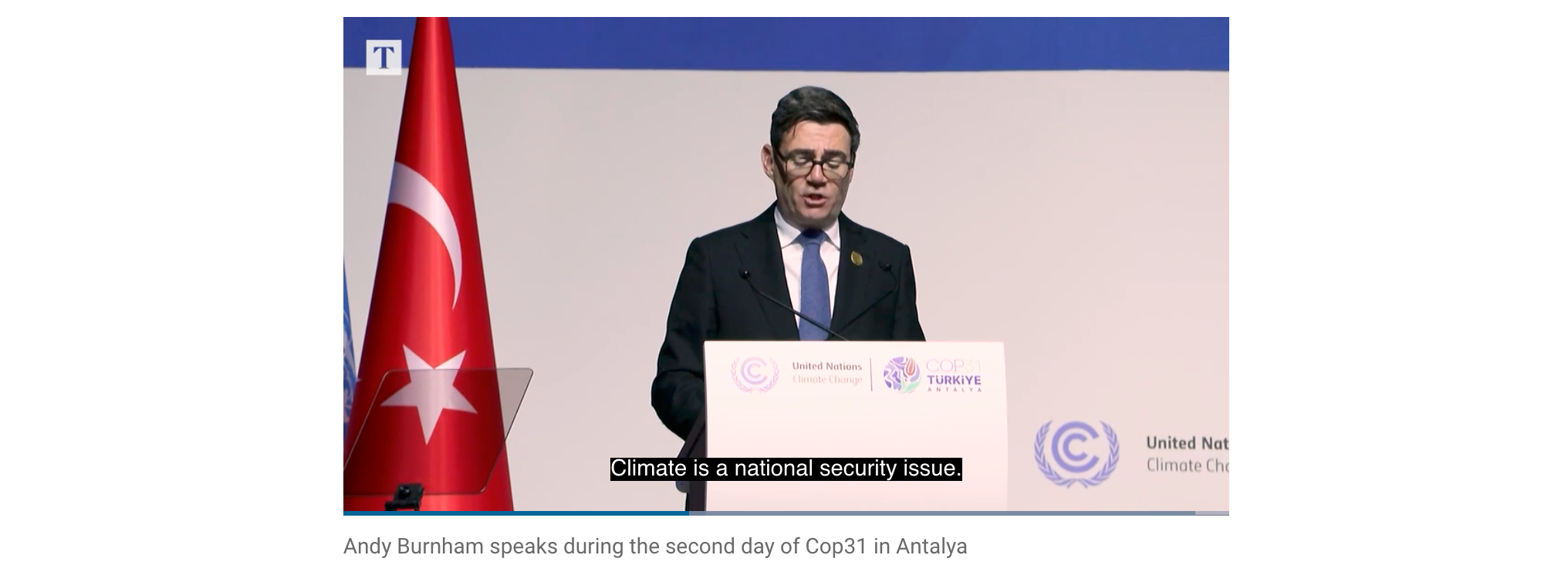
Do you know what is Luxembourg’s message to COP31 Türkiye in Antalya? If the reporting is correct: “modesty”. Question for my country’s government & stakeholders who want Europe to be “more modest” in our Climate Decency demands. Why does the Luxembourg Chambre des Députés’ chairman of our Climate Committee . . . tell Radio 100,7 . . . that ambitious demands get us nowhere?
- Pragmatism? General Patton didn’t liberate Luxembourg by negotiating with the weather, lowering his objectives or waiting for the enemy to develop a more cooperative attitude.
- General Patton understood the difference between a difficult mission and an impossible one.
- General Patton understood logistics, engineering, preparation, alliances and decisive execution.
- General Patton . . . above all . . . understood that a plan without the determination to carry it through was no plan at all.
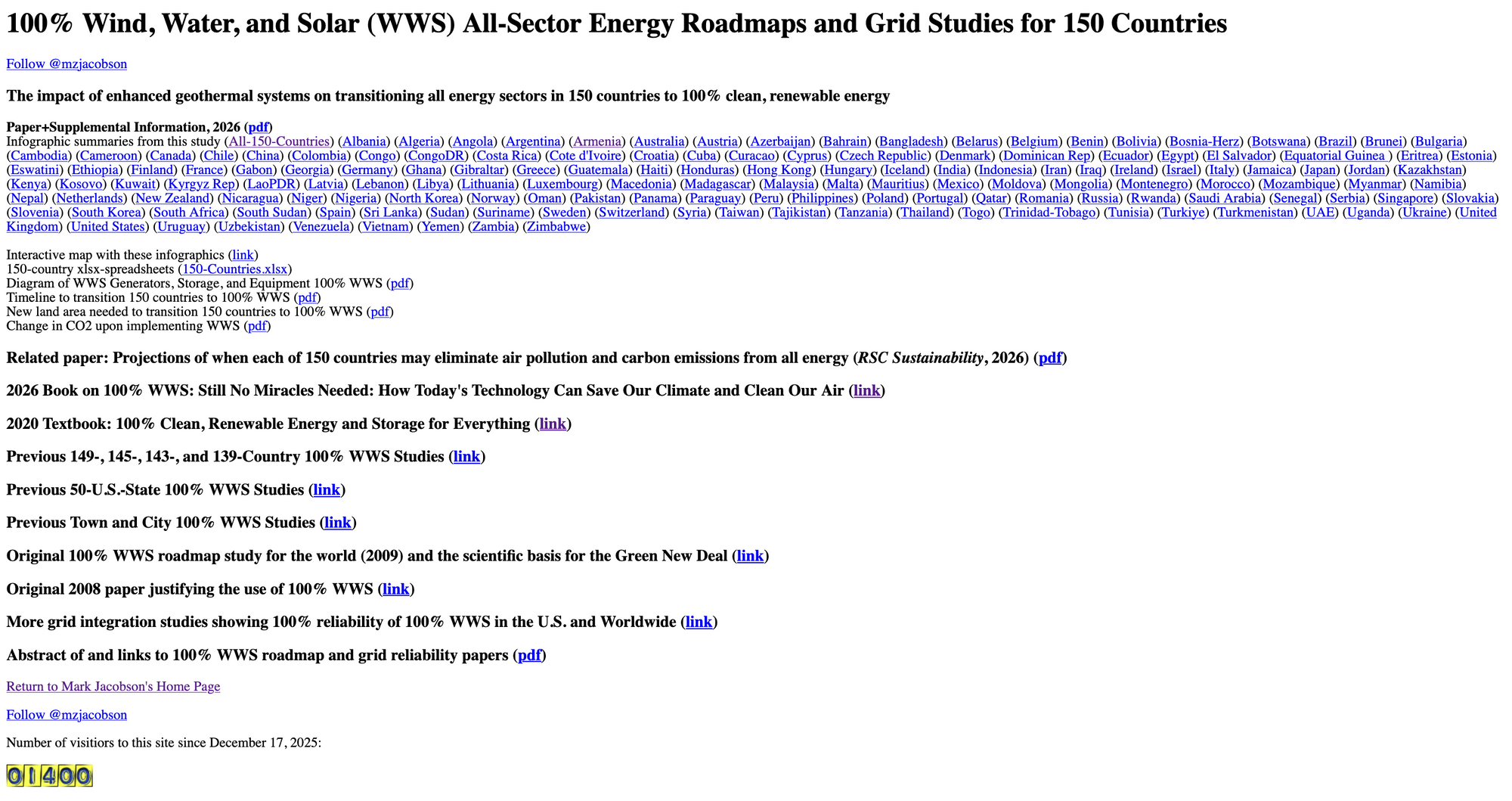
Now consider what Stanford University’s renowned Professor Dr Mark Jacobson and his colleagues have peer-reviewed (and see incarnating in green-finance x clean-tech power-house China and across the world): an engineering and economic roadmap for 150 countries to replace fossil fuels with wind, water and solar energy across transport, buildings, industry, agriculture, heating and cooling.
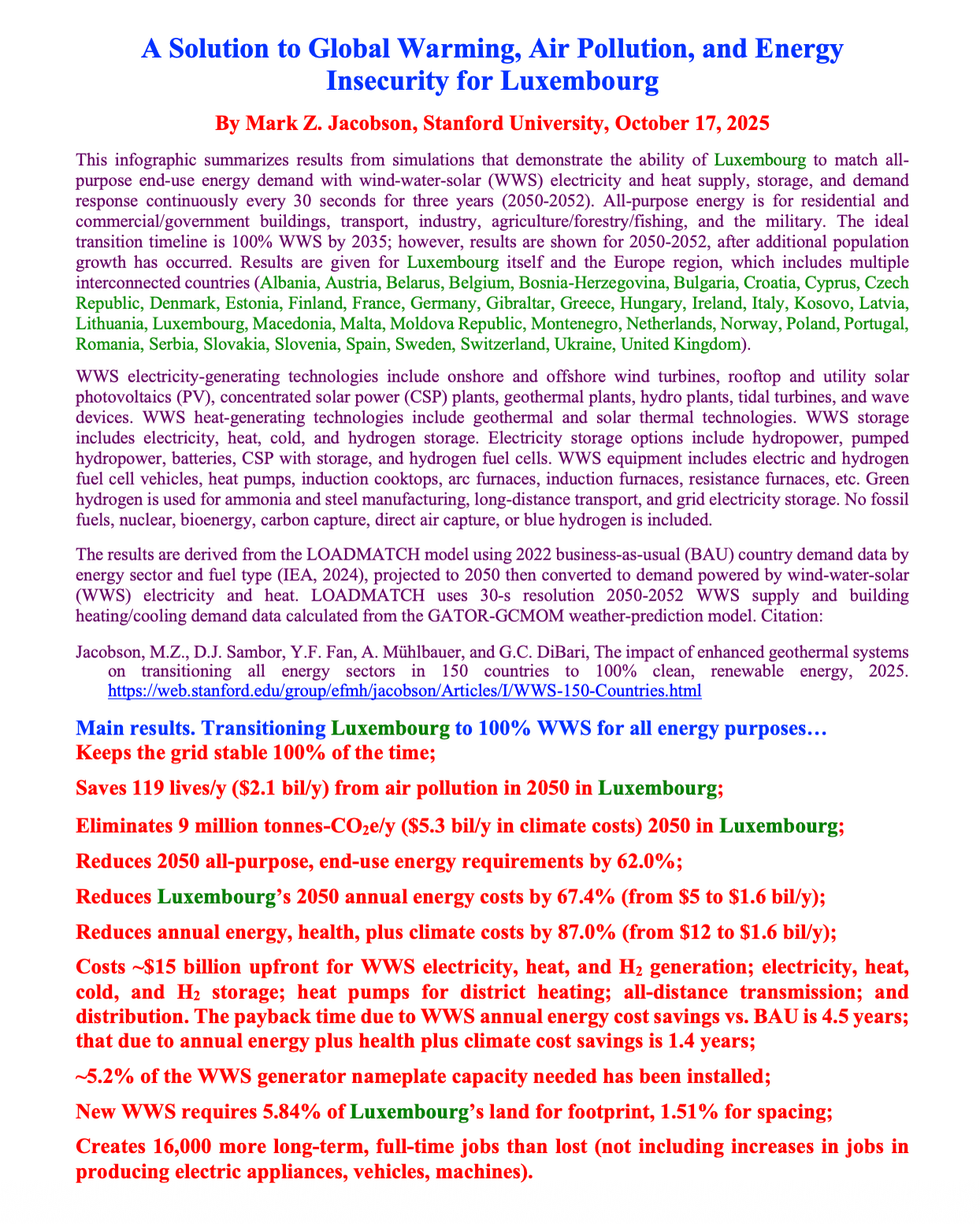
For Luxembourg, Stanford’s October 2025 roadmap models 62% less total energy demand, 67.4% lower annual direct energy costs, 119 premature air-pollution deaths prevented every year and 16,000 net new long-term full-time jobs. Not 62% less prosperity. Less energy squandered through combustion, inefficient machinery and an economy built around burning things to move people and heat buildings. Annual energy costs falling from approximately $5 billion to $1.6 billion, compared with the model’s 2050 business-as-usual scenario. Approximately $15 billion in upfront energy-system investment, with a modelled 4.5-year simple payback through annual direct energy-cost savings.
Now bring the entire continent into formation: Stanford’s interconnected European model covers 40 countries, including all 27 EU member states, Britain, Norway, Switzerland, Ukraine and other European neighbours. 57.6% less total energy demand. 63.7% lower annual direct energy costs. 217,232 premature air-pollution deaths prevented annually. More than three million net new long-term full-time jobs. The model estimates $5.373 trillion in upfront energy-system investment against approximately $1.172 trillion in annual direct energy-cost savings. Its simulations match electricity supply and demand every 30 seconds across three years, from 2050 to 2052.
These are scientific model results, not guaranteed outcomes. The land requirements, grid connections, investments and assumptions deserve serious examination. Luxembourg’s model in particular requires substantial land for solar generation, and the continent’s energy transition depends on cooperation across borders. Stanford identifies 2035 as its ideal transition target, although the detailed simulations concern 2050–2052. So examine the evidence. Challenge the assumptions. Improve the engineering. Assemble the coalition. Get moving.
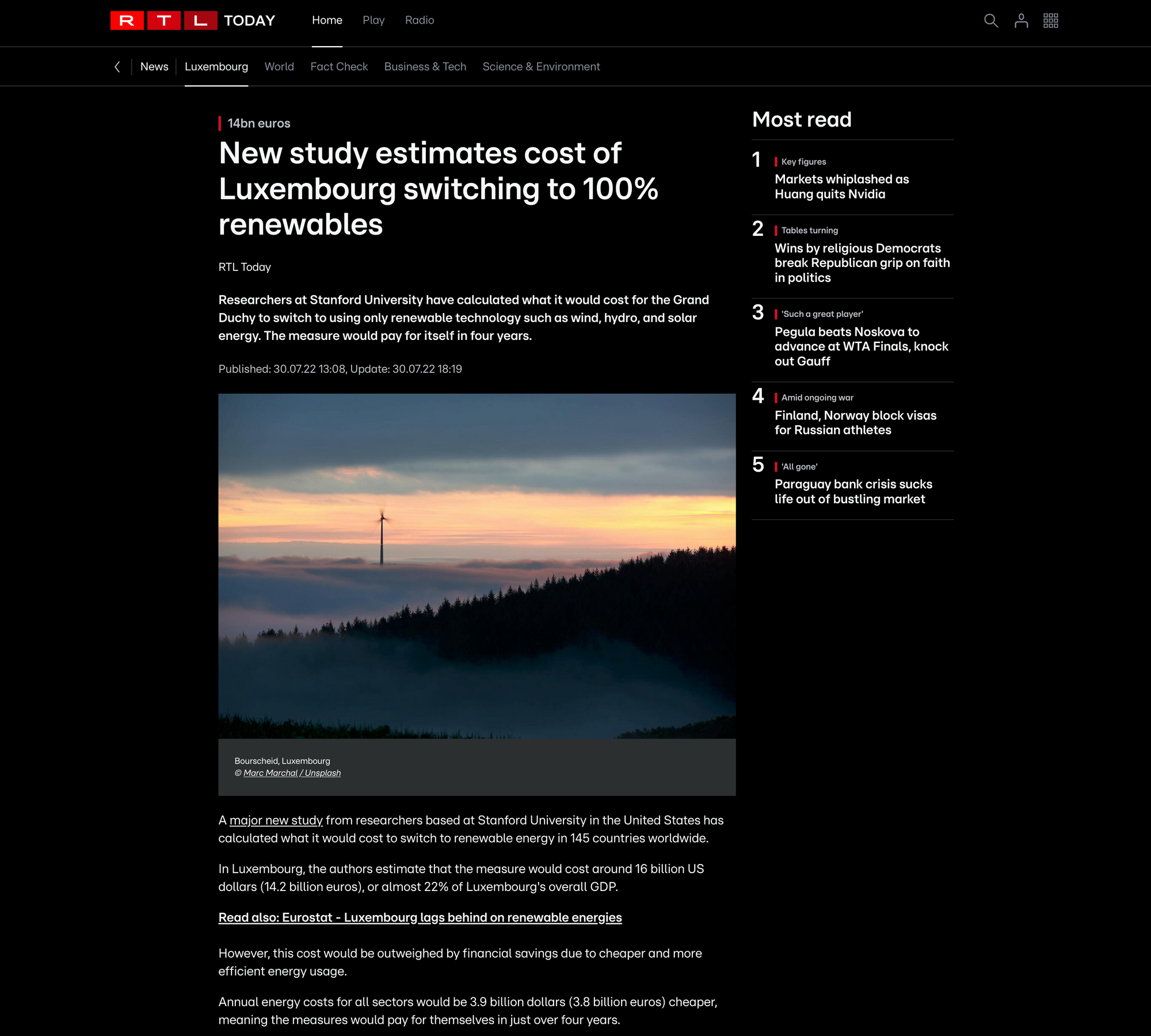
What’s happening? Virgule recently reported that domestic electricity generation covered 23.8% of Luxembourg’s consumption in 2024. Luxembourg’s dependence on imported energy is not going to disappear because somebody purchases a greener-looking certificate. Then there is Luxembourg’s petrol discount: perpetuating our dependence on fossil fuels while politicians explain that climate policy must remain “socially acceptable”. Of course it must. Question: but why spend public money making fossil-fuel dependence marginally cheaper instead of making that dependence increasingly unnecessary? RTL in 2022 reported what it would cost for the Grand Duchy of Luxembourg to switch to using only renewable technology such as wind, hydro, and solar energy: approximately 16 billion US dollars (14.2 billion euros), or almost 22% of Luxembourg’s overall GDP. The measure would pay for itself in four years.
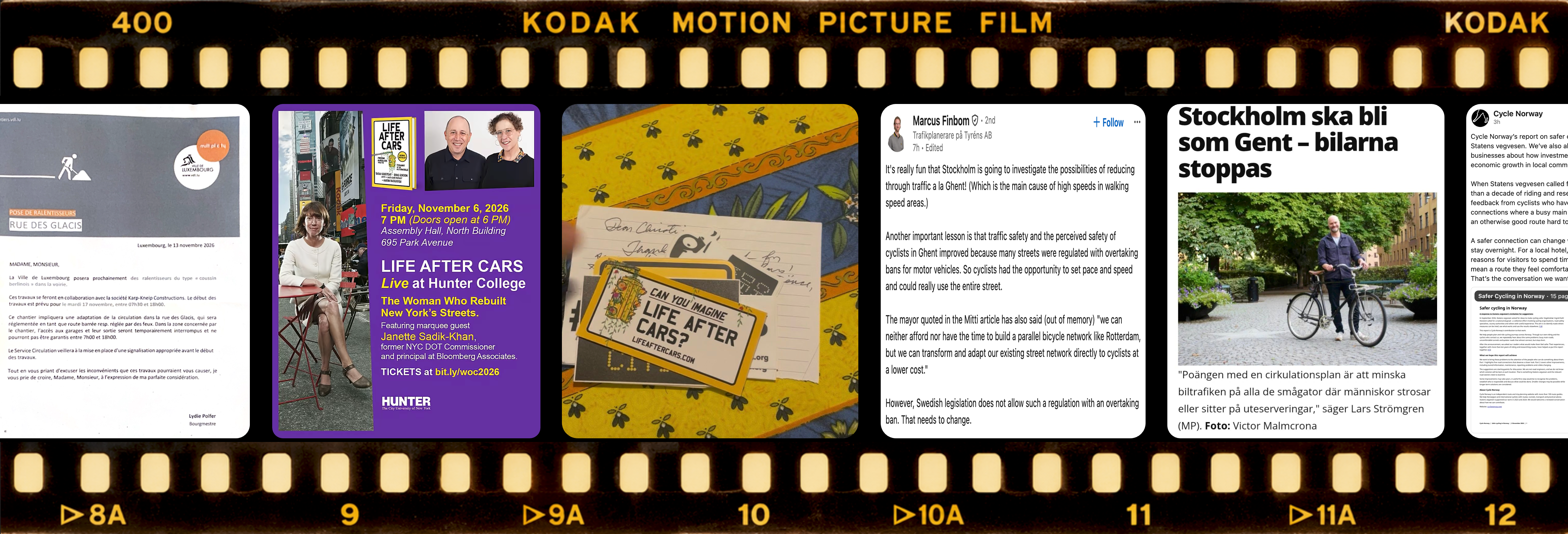
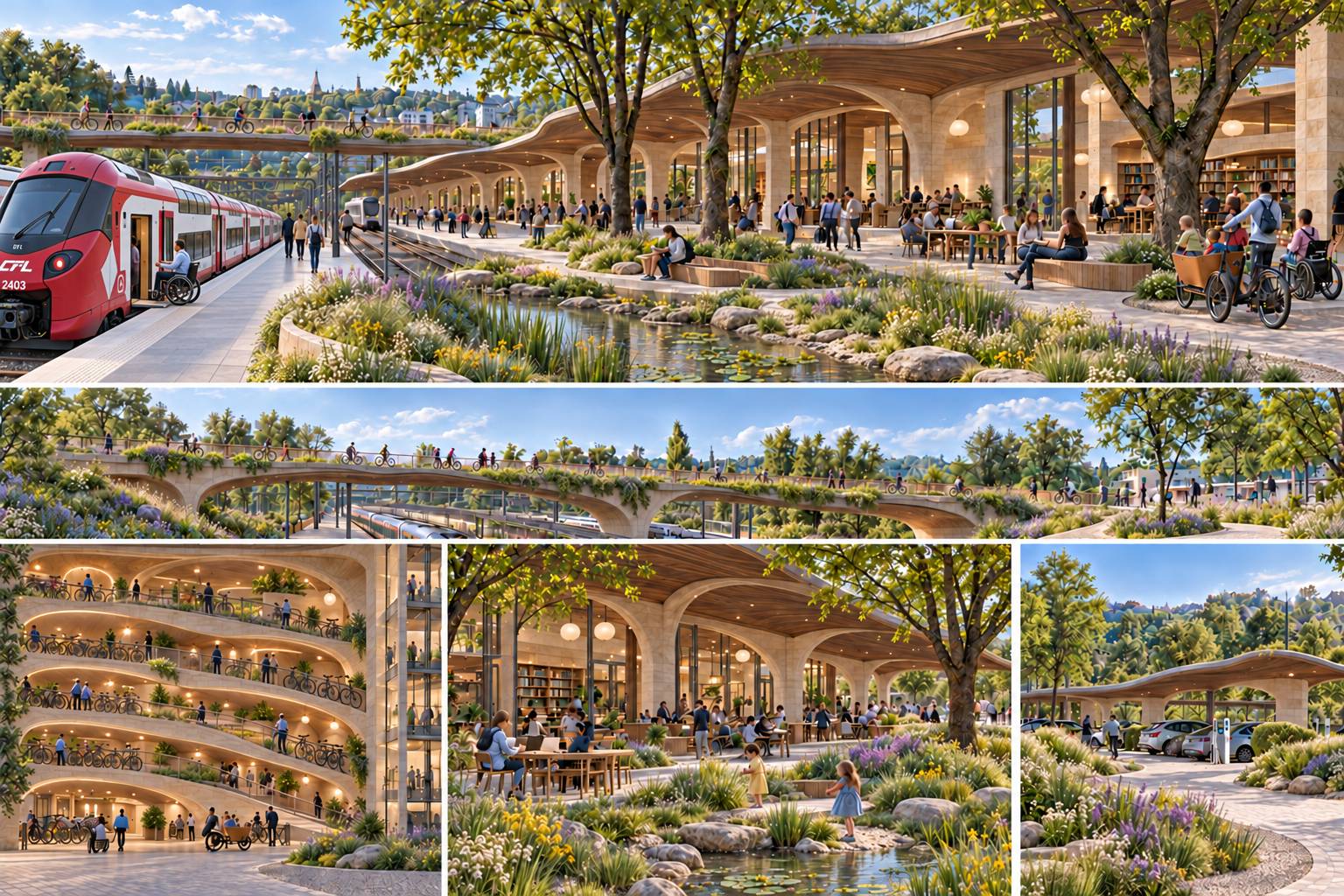
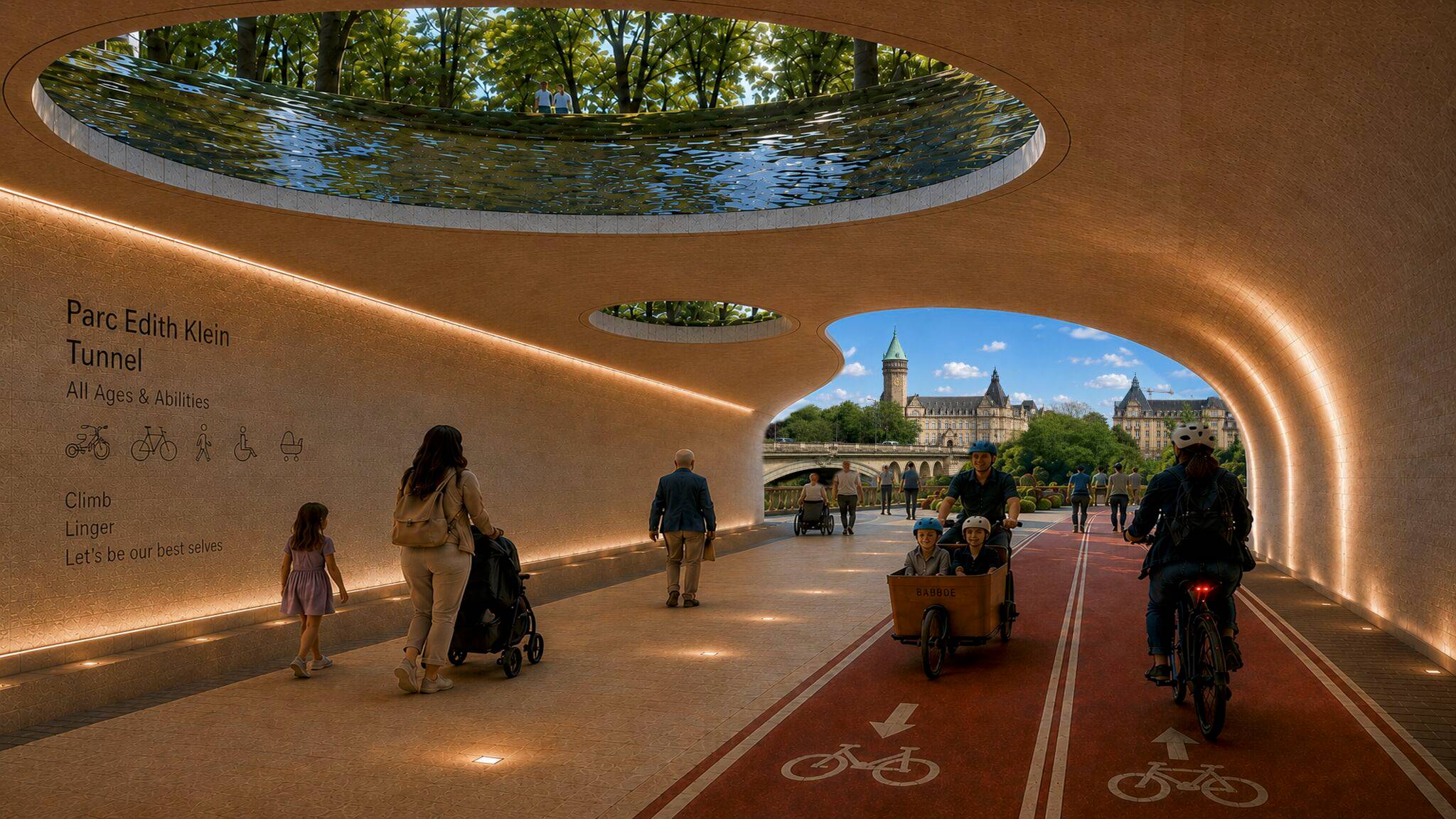
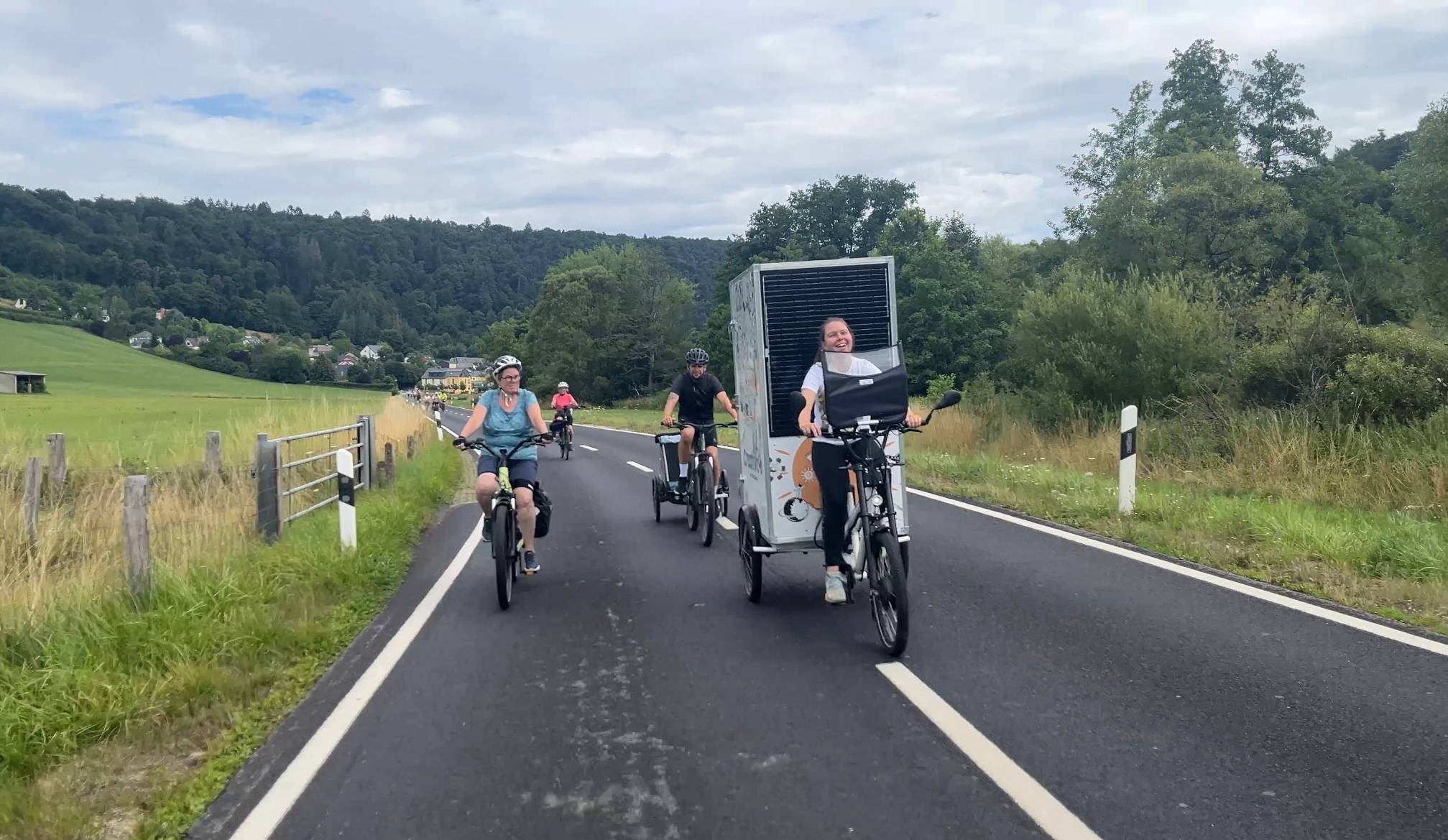
At Youth4Planet, we work with young people to reimagine the places they actually inhabit: the pavement outside their schools + the dangerous crossings + the streets without trees’ shade + the bicycle journeys nobody dares make + the public spaces surrendered to parked cars. With CreatiVelo + Healthy Streets + realistic visualizations, children can demonstrate what a healthier, safer and more beautiful Luxembourg might look like. One neighbourhood, one sheet of paper, one conversation and one border at a time. This is how Big Decency pollinates communities and turns imagination into practical Climate Wins.
A kilowatt-hour never consumed needs no power station, no battery, no transmission line and no argument about nuclear waste. A child who can safely bicycle to school needs no petrol subsidy. A well-insulated home with an efficient heat pump needs far less imported energy. A town designed around people rather than compulsory car ownership returns land, time, money and health to its citizens. This is the fundamental distinction between “Good Growth” and “Bad Growth”. Good growth creates healthier lives, meaningful jobs, secure energy, thriving communities and freedom from unnecessary consumption. Bad growth expands congestion, pollution, preventable illness, fossil-fuel dependence, climate damages and the profits extracted from keeping people dependent on yesterday’s cancer’y technologies. One creates prosperity. The other sends our children the bill . . . second after second . . . minute after minute . . . hour after hour . . . day after day . . week after week . . . month . . . after month . . . year after year . . . decade after decade . . . century after century.
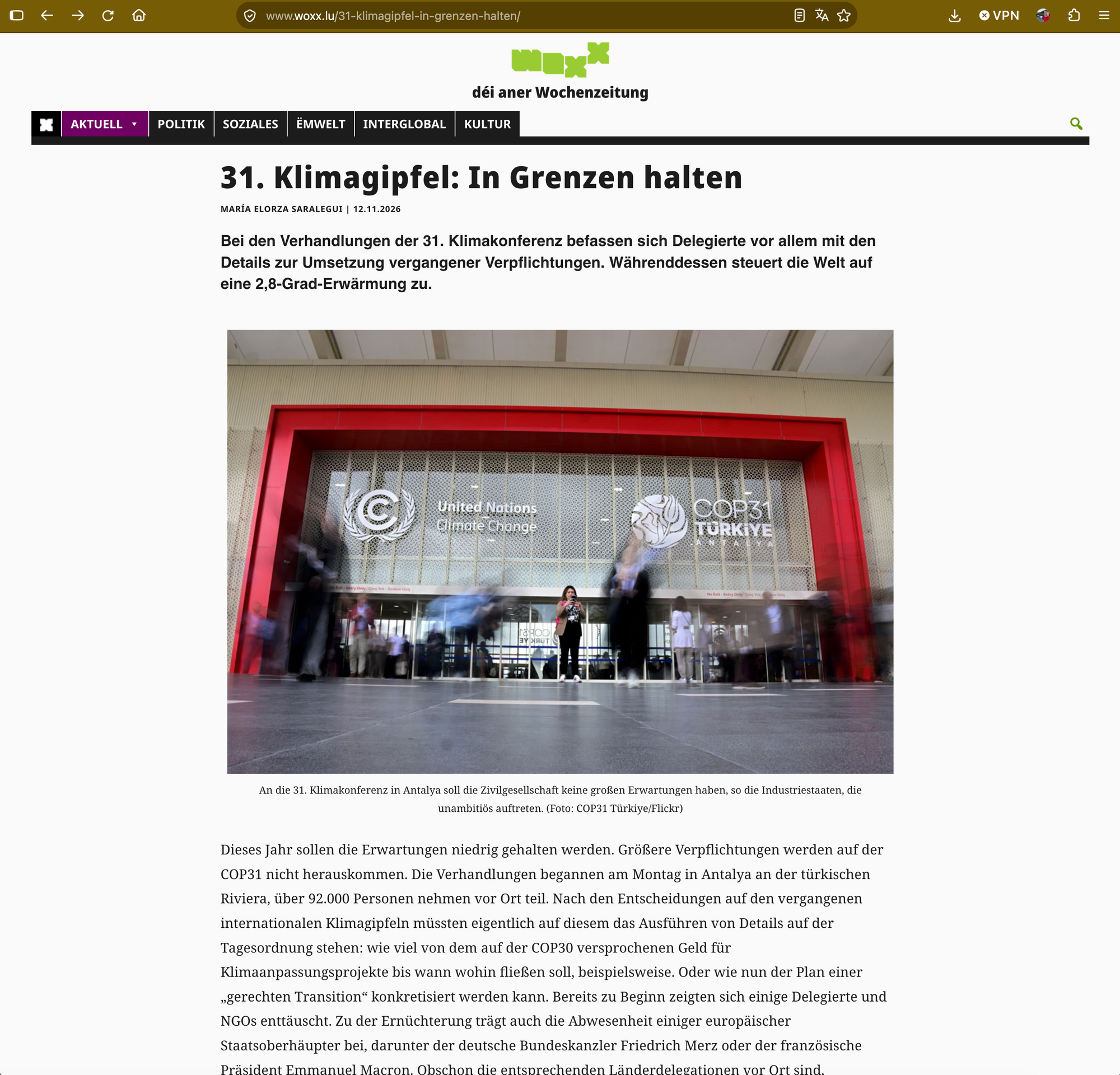
The latest Woxx reporting warns that Luxembourg risks missing our own 2030 emissions-reduction target under existing measures. Current United Nations assessments suggest approximately 2.6°C to 2.8°C of global warming by 2100 under differing policy assumptions. Lower than some of the terrifying trajectories discussed by Bloomberg in 2019-2026, but still a profoundly dangerous future, and certainly no cause for political complacency.
So when Luxembourg’s leaders speak about the need for coalitions, I have a proposition:
‣ Bring Stanford University’s peer-reviewed research to the University of Luxembourg
‣ Assemble our engineers, scientists, architects, economists, farmers, municipalities, entrepreneurs, educators and young people
‣ Invite our neighbors from Belgium, France, Germany and across Europe
‣ Examine the modelling, test the costs, identify the obstacles and build an actionable continental energy transition worthy of the name
The #GreatestGeneration that liberated Luxembourg did not possess perfect information, unlimited resources or certainty of success. They faced terrible risks, made consequential decisions and paid an enormous human price. We honor them NOT by pretending that Climate Change is World War III . . . but by refusing to inherit their freedom while abandoning their courage. This evening, I returned to the house where George Platt Waller knocked on my grandparents’ door in May 1940. The same house where I took my first steps. Its walls have outlived the Nazi occupation, the liberation of Luxembourg, the Cold War and generations of political promises made, kept and mocked. The question today is what kind of world the next child taking those first steps will inherit.
Science does not vote. The Atmosphere does not negotiate. Our children do not have another century to wait for Europe’s leaders to discover the difference between Modesty and Decency-demanding Leadership. General Patton and the Liberators of Luxembourg understood that victory required more than declaring worthy objectives. It required the courage, organization and determination to achieve them. We have the science. We have the engineering. We have extraordinary opportunities to improve human health, prosperity and security. What we need now is the courage to turn Continental Climate Decency into Continental Climate Wins.
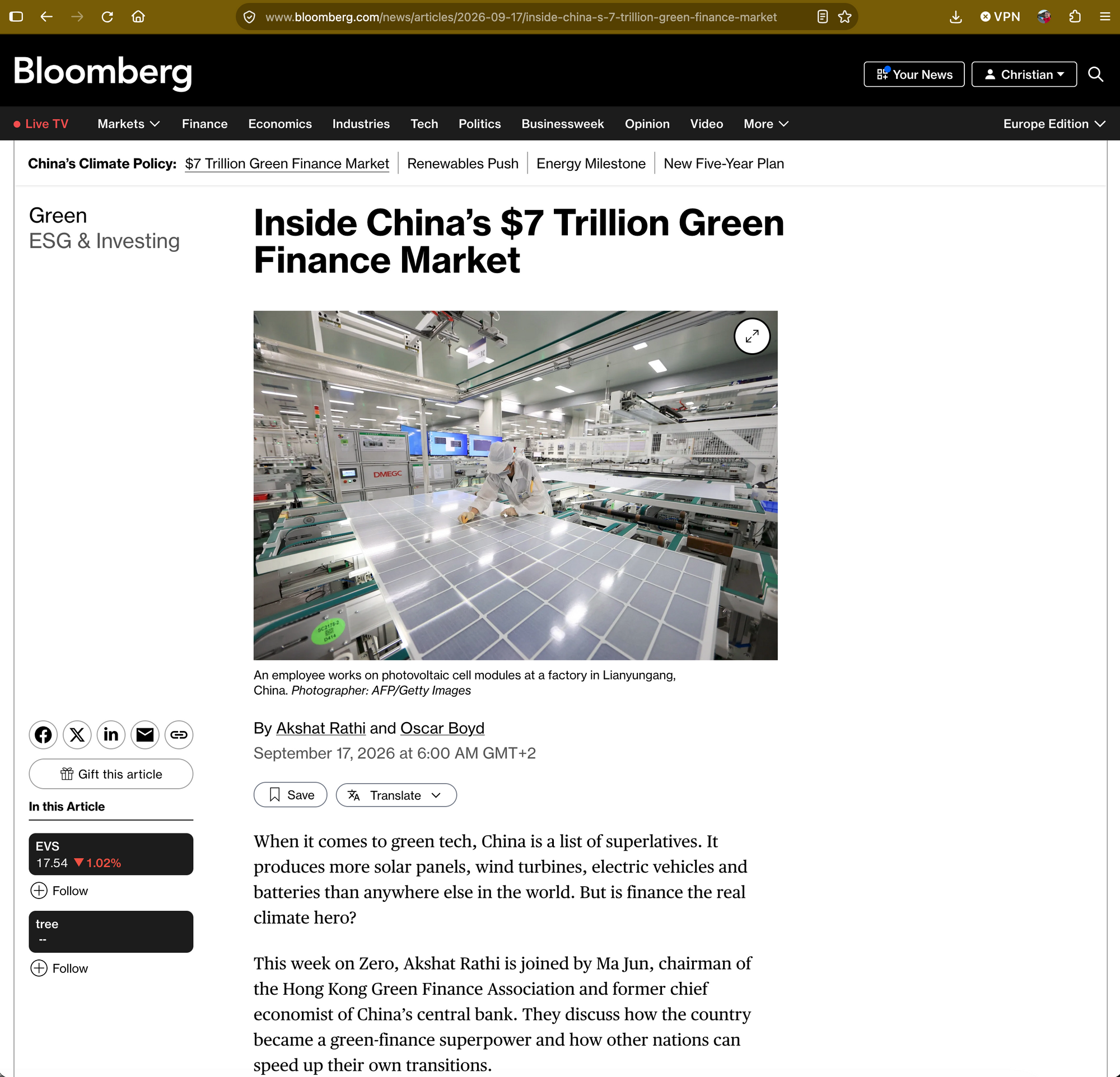
Meanwhile: China in the last decade has grown its Green Finance market . . . from USD $1 Trillion to USD $7 Trillion . . . here is a Bloomberg News gift-link to Bloomberg Editor Askhat Rathi’s interview with Dr Ma Jun, chairman of the Hong Kong Green Finance Association and former chief economist of China’s central bank. They discuss how the country became a green-finance superpower and how other nations can speed up their own transitions https://www.bloomberg.com/news/articles/2026-09-17/inside-china-s-7-trillion-green-finance-market?accessToken=eyJhbGciOiJIUzI1NiIsInR5cCI6IkpXVCJ9.eyJzb3VyY2UiOiJTdWJzY3JpYmVyR2lmdGVkQXJ0aWNsZSIsImlhdCI6MTc5NDYwODE3MSwiZXhwIjoxNzk1MjEyOTcxLCJhcnRpY2xlSWQiOiJUTEhQU0FLR1pBSjYwMCIsImJjb25uZWN0SWQiOiI2MDlEQzFFNUY4MDc0QkE3QkM5NDhBMTk3RDg4QjgxNCJ9.StnHbF4CdlDs5w_uFWdRHRHihrg6weYuLnIqmnCa1B0
Post Script: because the word of our era is “Klimaverantwortungsverweigerungspragmatismus” . . . one last thought about Political Courage + Scientific Integrity and the ghosts of Henri Deterding. We cannot forget what we witnessed at Luxembourg’s Observatoire de la politique climatique’s 19th May 2025 gathering at Neimënster. The chairman of Luxembourg’s parliamentary Environment Committee, was laboriously lamenting that discussing Climate Action felt like preaching to a tiny, half-empty church-choir of believers. Fortunately, OPC member (& until recently Chair of the Scientific Committee of the European Environment Agency) Professor Claire Dupont challenged the chairman of Luxembourg’s parliamentary Environment Committee’s Kentucky Fried premise:
- Climate science is not a religion
- Climate scientists and Climate advocates are not a small congregation of fanatics
- Overwhelming public concern demonstrated by the OPC’s own research cannot be dismissed as a handful of believers preaching to themselves
- 88% of Luxembourg’s adults consider climate and environmental issues important
- 83% recognise the urgency of slowing climate change
- Those are not religion-like beliefs
- They are findings from public-opinion research about an existential problem grounded in physics, chemistry, biology and economics
Climate Action Tiger and I approached the professor afterwards to thank her for doing what I wish more of our public figures would do: confronting nonsense with evidence and the courage to speak plainly. Now, eighteen months later?
- We hear the same chairman of Luxembourg’s parliamentary Environment Committee explaining that Europe must be more modest at COP31
- We hear the same chairman of Luxembourg’s parliamentary Environment Committee explaining that ambitious demands achieve little
- We hear the same chairman of Luxembourg’s parliamentary Environment Committee explaining that we need compromise.
Take-aways:
- What a business-as-usual sleight-of-hand . . . changing Political Responsibility into Political Resignation.
- First, apparently nobody is listening.
- Then, when the evidence shows that The Public is listening, we are told not to ask for too much.
- Yesterday’s imaginary empty church has become today’s excuse for modest ambition.
The underlying message has barely moved an inch.This is where the historical DNA of Henri Deterding becomes impossible for us to ignore. The former Royal Dutch Shell chairman belonged to an era when concentrated fossil-fuel wealth x political influence x authoritarian sympathies formed a particularly poisonous alliance. The Tobacco industry’s subsequent machinery of Manufactured Doubt, followed by decades of fossil-fuel lobbying, offers another warning about how commercial interests can dress delay up as reasonableness, uncertainty and public concern.
The chairman of Luxembourg’s parliamentary Environment Committee’s rhetoric belongs to a political tradition whose consequences we should recognise by now: manufacture doubt about the public mandate, portray scientific urgency as ideological enthusiasm, and rebrand inadequate action as responsible pragmatism. What makes that tradition so maddening is that it treats the people demanding evidence-based solutions as the unreasonable ones, while the continued combustion of fossil fuels, the pollution, the avoidable deaths, the energy insecurity and the mounting climate damages are accepted as the respectable status quo. We have somehow reached a point where governments can contemplate adapting Europe to potentially 5°C of warming while their political representatives counsel modesty about preventing it. The inversion of political responsibility is unacceptable.
I keep returning to General Patton because he understood something that contemporary political leaders seem increasingly determined to forget. Coalitions are not built to make objectives disappear. Coalitions are built to accomplish objectives that cannot be achieved alone. General Patton understood preparation, logistics, engineering, allied cooperation and execution. He did not confuse the difficulties of a mission with permission to abandon it. The Liberation of Luxembourg required considerably more than reassuring speeches about the importance of finding common ground.
Patton 2.0 was needed when the chairman of Luxembourg’s parliamentary Environment Committee was complaining about his imaginary empty church in 2025. Patton 2.0 is needed now, when Luxembourg’s political leadership is preaching modesty at COP31. What we need is that same operational determination:
- Scientists identifying the realities
- Engineers developing the solutions
- Communities building the coalitions
- Voters and Political Leaders taking responsibility for measurable victories
At Youth4Planet, we encounter the opposite of the chairman of Luxembourg’s parliamentary Environment Committee‘s imaginary mostly empty congregation. We meet children, educators and communities who want to understand the science, improve their surroundings and participate in building a liveable future. They do not need another politician explaining why ambition is inconvenient. They need adults who incarnate the Courage + Competence and Decency required to turn knowledge into action.
Questions? Reflections? Ideas about Patton 2.0 + Climate Decency? Chat with Climate Action Tiger and me: christian@youth4planet.org Onwards and upwards . . . with results.
Sources and Further Reading:
i) George Platt Waller, Defiant Diplomat: https://udpress.udel.edu/book-title/defiant-diplomat-george-platt-waller-american-consul-in-nazi-occupied-luxembourg-1939-1941/
ii) Algerian Spahis Monument in Rue Principale L-4698 Lasauvage Luxembourg: https://www.visitluxembourg.com/place/algerian-spahis-monument-in-lasauvage
iii) RAF official campaign history: https://www.raf.mod.uk/what-we-do/our-history/air-historical-branch/second-world-war-campaign-narratives/raf-in-the-bombing-offensive-against-germany-vol-ii-restricted-bombing-september-1939-may-1941/
iv) Bloomberg, 3rd December 2019: https://www.bloomberg.com/news/articles/2019-12-03/global-temperature-headed-toward-5-degree-increase-wmo-says
v) Bloomberg, 26th October 2026: https://www.bloomberg.com/news/articles/2026-10-26/eu-wants-countries-to-draw-up-plans-to-deal-with-warming-of-3c
vi) Bloomberg, 10th November 2026: https://www.bloomberg.com/news/newsletters/2026-11-10/eu-heads-to-cop-as-green-agenda-faces-pressure-from-right
vii) Virgule.lu, Luxembourg’s Electricity Mix: https://www.virgule.lu/luxembourg/quelle-part-le-nucleaire-represente-t-il-dans-l-electricite-du-luxembourg/85883752.html
viii) Woxx Sc, COP31 Türkiye: https://www.woxx.lu/31-klimagipfel-in-grenzen-halten/
ix) Radio 100,7 – Paul Galles, 9th November 2026 https://www.google.com/search?client=firefox-b-d&q=Radio+100%2C7+-+Paul+Galles%2C+9th+November+2026
x) Stanford University, Luxembourg roadmap: https://web.stanford.edu/group/efmh/jacobson/Articles/I/150Country/25-WWS-Luxembourg.pdf
xi) Stanford University, Europe roadmap: https://web.stanford.edu/group/efmh/jacobson/Articles/I/150Country/25-WWS-Europe.pdf
xii) Bloomberg, 17th September 2026: Inside China’s $7 Trillion Green Finance Market https://www.bloomberg.com/news/articles/2026-09-17/inside-china-s-7-trillion-green-finance-market
xiii) The Luxembourg Climate Policy Observatory (Observatoire de la politique climatique, OPC), 2024 Survey of the Luxembourg population in September 2024, in collaboration with the Luxembourg Institute of Socio-Economic Research (LISER) https://opc-luxembourg.lu/wp-content/uploads/2025/05/OPC-2025-Report-Public-Opinion-on-Climate-Change-Action-in-Luxembourg.pdf
xiv) OPC, public event, 19th May 2025, The Abbey of Neimënster: https://opc-luxembourg.lu/en/event/climate-survey/
xv) Henri Deterding: le sulfureux fondateur de la Shell, by Journalist and Historian Georges Bornes: https://www.mollat.com/livres/2635199/georges-bornes-henri-deterding-le-sulfureux-fondateur-de-la-shell
#ContinentalClimateDecency #Luxembourg #COP31 #ClimateWins #Youth4Planet #EUClimatePact #RenewableEnergy #ActiveMobility #Europe #GeneralPatton2PointONeeded